Gnss Gps – How it works
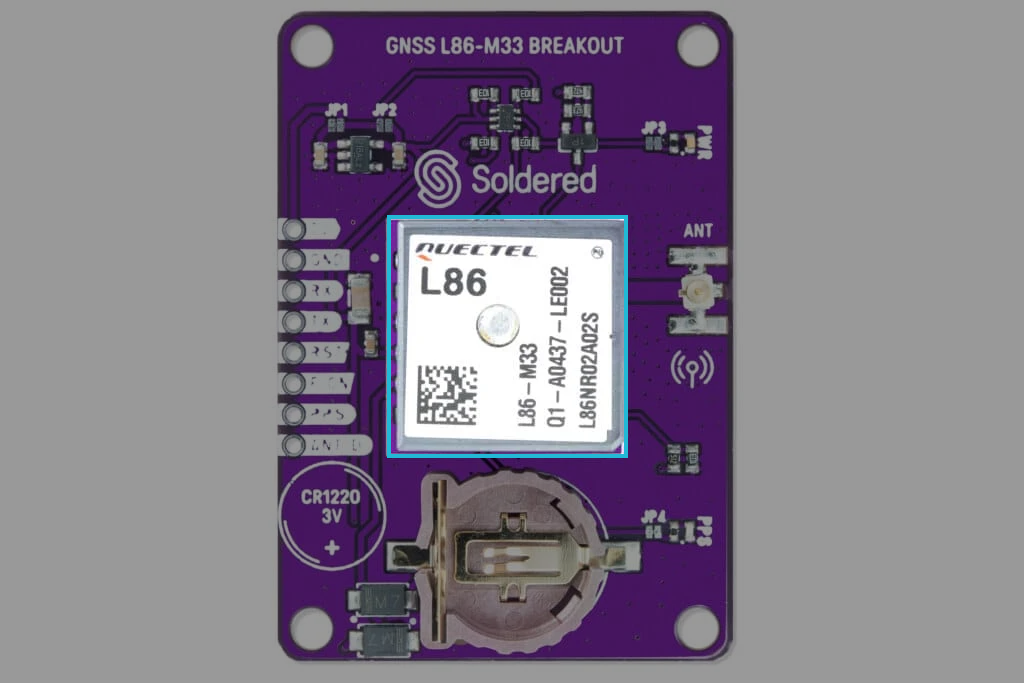
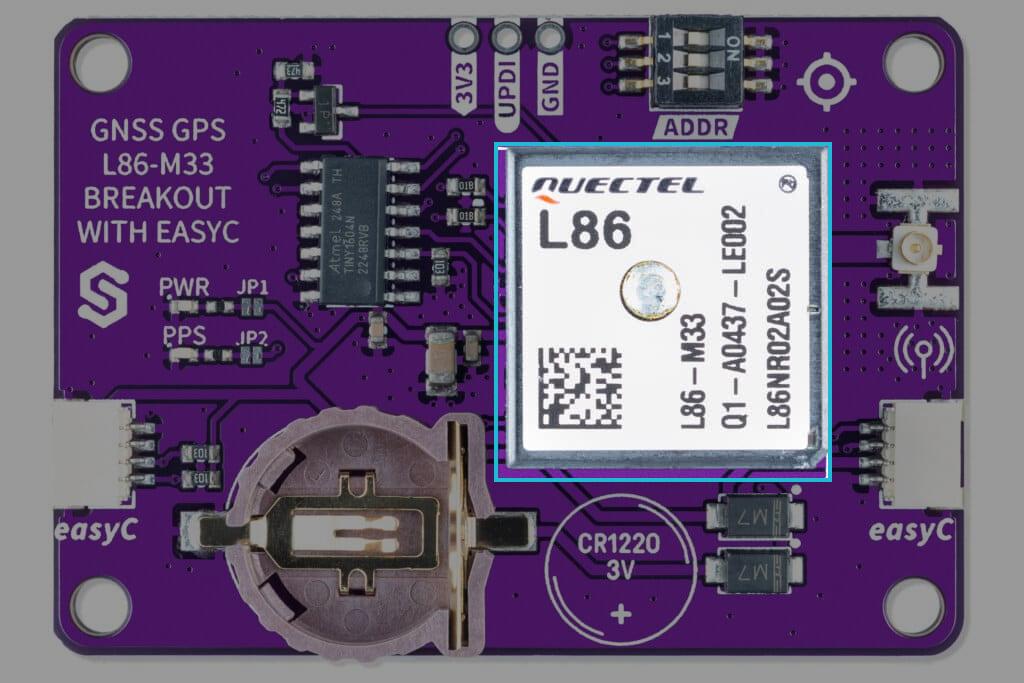
The L86-M33 is a highly compact and energy-efficient GNSS module that supports GPS, GLONASS, and Galileo satellite systems. Designed for applications requiring precise positioning, the L86-M33 includes advanced features such as EASY™ (Embedded Assist System), AlwaysLocate™, and an integrated LOCUS™ data logger.
Datasheet
For detailed technical specifications, please refer to the official L86 Datasheet:
L86-M33 Datasheet
Complete technical documentation for the GNSS-GPS L86-M33 board
How the L86-M33 Works
The L86-M33 module receives signals from multiple GNSS satellite constellations, allowing for high-accuracy positioning even in challenging environments. Its small form factor and built-in antenna make it ideal for IoT, asset tracking, and wearable devices.
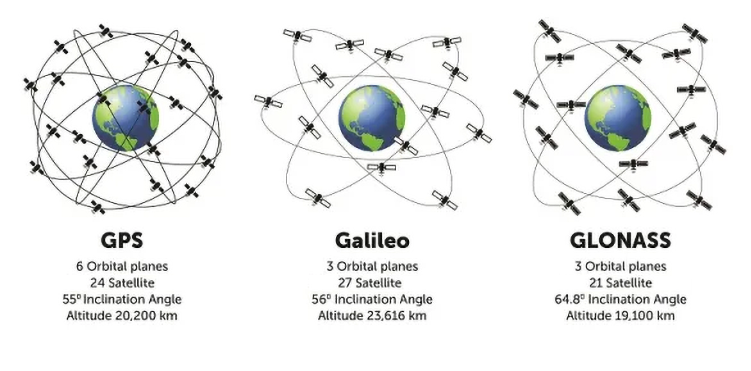
- Multi-GNSS Support - The module processes signals from GPS, GLONASS, and Galileo, improving accuracy and reducing positioning time compared to single-system receivers.
-
Embedded Assist System (EASY™) - This feature allows the module to predict satellite orbits and accelerate positioning using up to 3 days of ephemeris data, even when satellite signals are weak.
-
AlwaysLocate™ Power Optimization - Adjusts the module's activity dynamically based on motion and environmental conditions, ensuring energy-efficient operation without compromising accuracy.

-
Internal LOCUS™ Data Logger - The built-in flash memory can store location history for over 16 hours, eliminating the need for an external microcontroller for basic tracking applications.
-
Integrated and External Antenna Support - The 18.4mm × 18.4mm onboard ceramic patch antenna ensures reliable operation, while an IPX connector allows for an external active antenna if needed.
High-Precision Positioning
The L86-M33 provides high-sensitivity tracking, ensuring accuracy in urban areas and weak-signal environments:
- -167 dBm tracking sensitivity allows reliable operation indoors and in obstructed environments.
- Position accuracy of ±2.5 meters in ideal conditions.
- Balloon Mode supports positioning at altitudes up to 80 km, making it suitable for high-altitude projects.
- Multi-tone Active Interference Canceller (MTK chipset) filters out unwanted signals, improving accuracy in noisy environments.
Communication Interface
The L86-M33 communicates with microcontrollers and other devices through a UART interface, making integration straightforward. The key communication pins include:
- TX (Transmit): Outputs GNSS data to a connected microcontroller or device.
- RX (Receive): Receives commands from the microcontroller to configure the module.
- PPS (Pulse Per Second): Provides a 1 Hz timing pulse synchronized with GNSS signals, useful for high-precision timing applications.
- F_ON (Force On): Used to wake the module from low-power mode when needed.
The module supports standard NMEA sentences for easy parsing of positioning data.
I2C communication - Qwiic
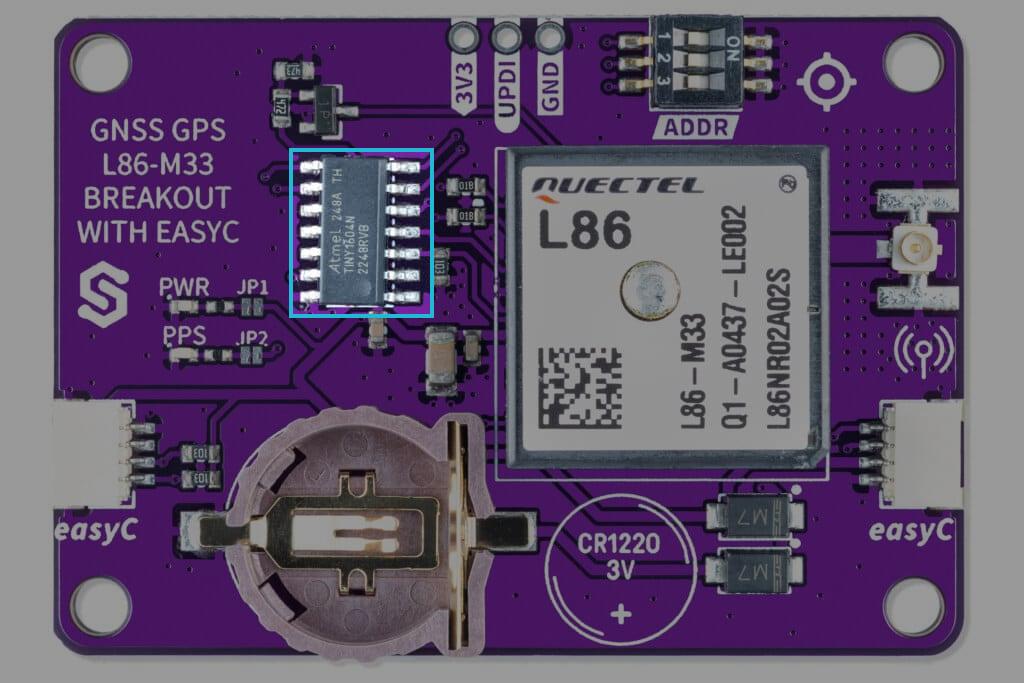
Qwiic versions of the product use the onboard ATTINY404 MCU to implement I2C communication. The breakout board operates with a default I2C address of 0x30, but it can be changed using onboard switches. Once detected, the ATTINY404 receives data from the sensor and passes it to the main MCU using the I2C data line. To check in detail how the ATTINY404 is programmed, please refer to the firmware GitHub page.