Hall Effect Sensor - Overview
Hall effect sensor
The Hall effect sensor circuit board is a high-precision sensor that measures the presence of a magnetic field using its digital output version and quantifies the magnetic field’s strength with the analog version of the breakout board. This sensor is an excellent option for determining the presence, position, and proximity of magnetized objects. It also comes in a version with I2C communication featuring a default address of 0x30, and it is designed for seamless Qwiic (formerly easyC) connectivity—eliminating the need for soldering.
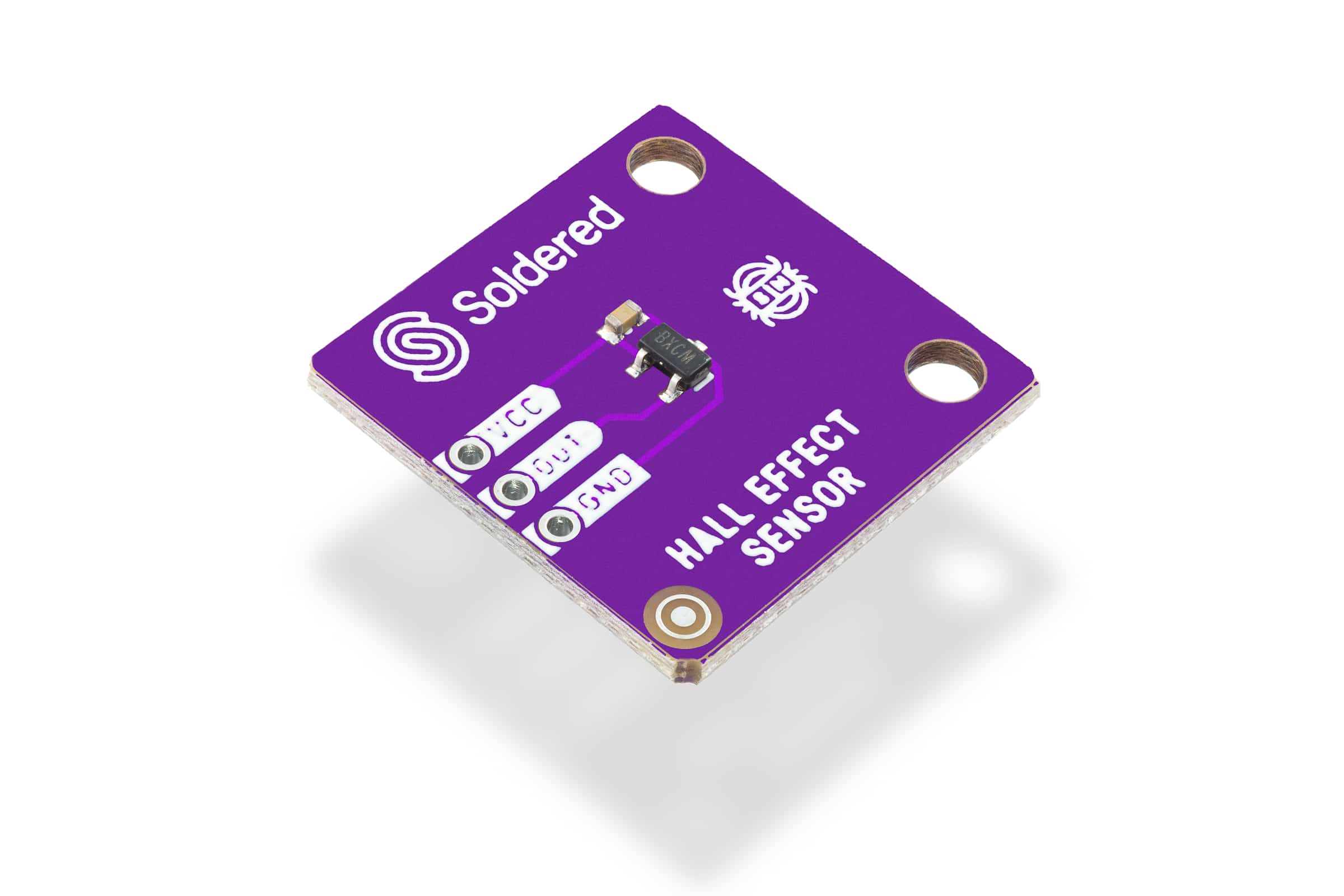
Hall effect sensor board
Which products is this documentation for?
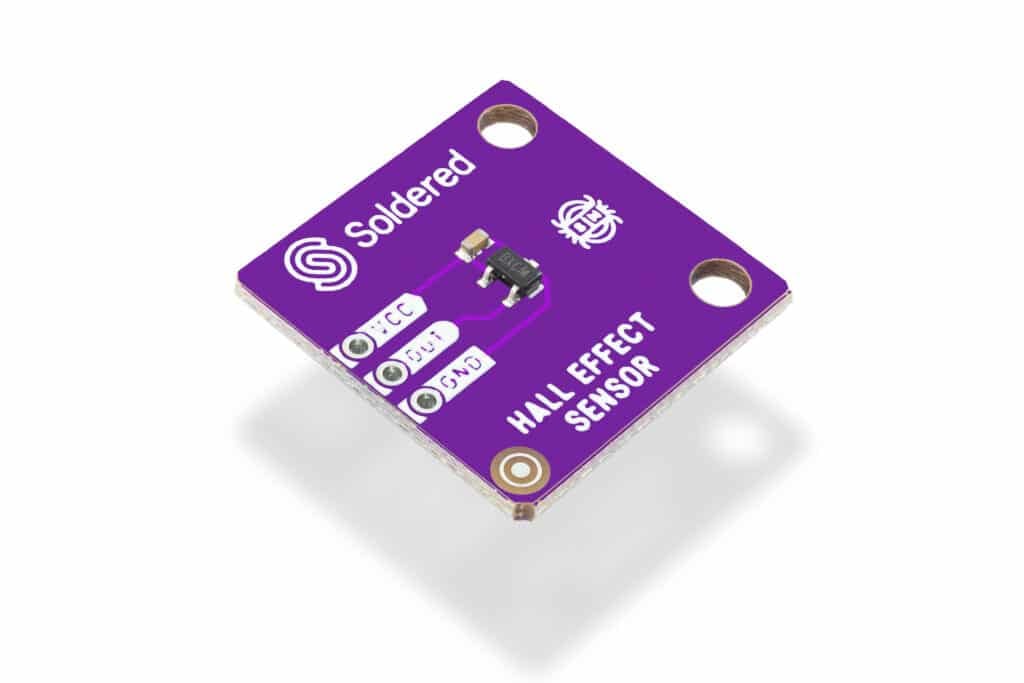
Hall effect sensor breakout with analog output
333079
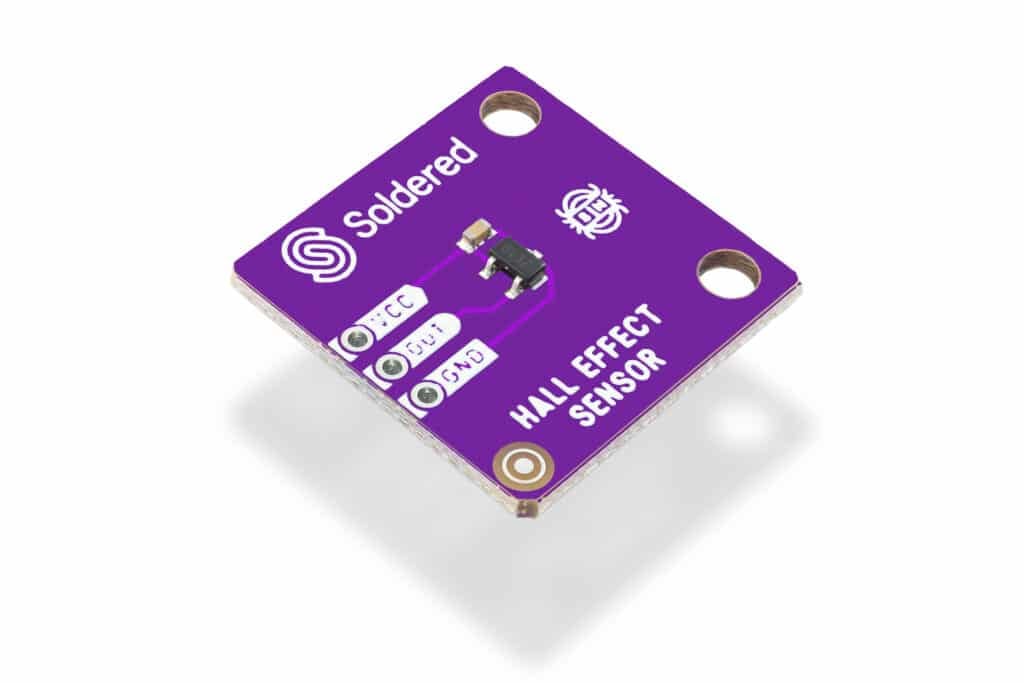
Hall effect sensor breakout with digital output
333080
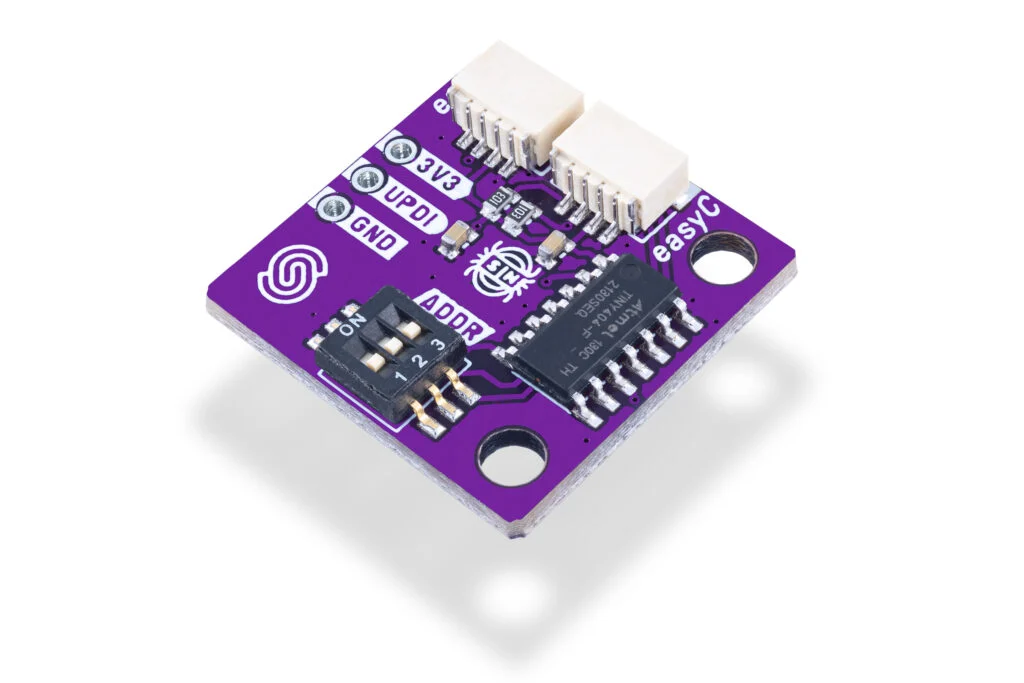
Hall effect sensor breakout with digital output & easyC
333081
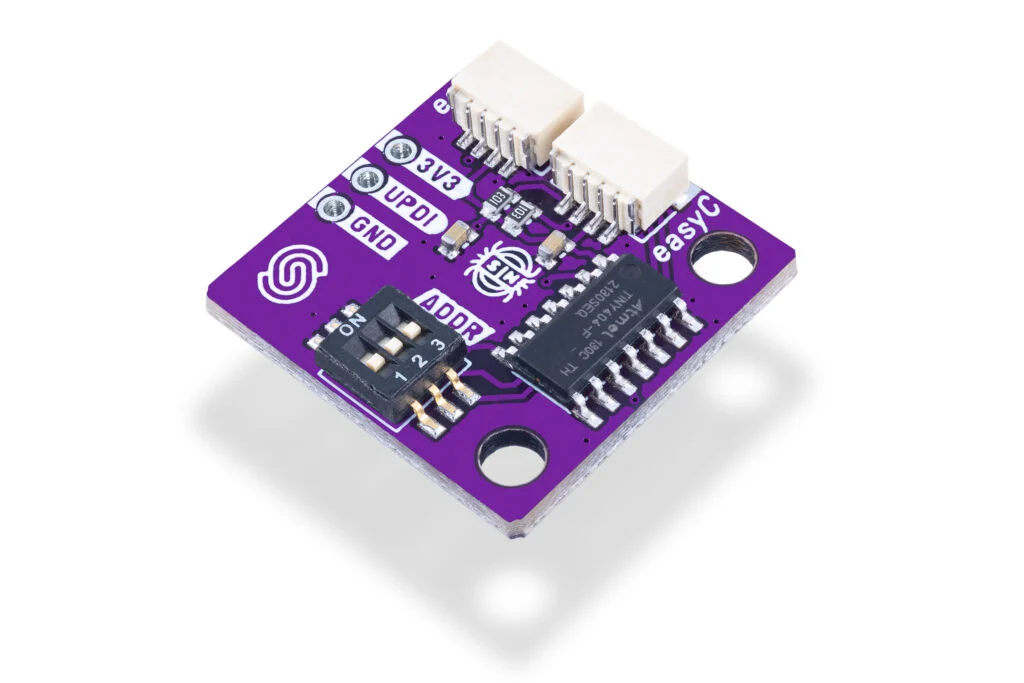
Hall effect sensor breakout with analog output & easyC
333082
Key Features
- Regular
- Logic voltage level: 3.3V - 5V
- Operating voltage: 2.25V - 5V
- Sensor:
- Analog: SI7211-B-00-IV
- Digital: SI7211-B-06-IV
- Output:
- Analog
- Digital
- Communication:
- Analog pin for analog version
- Digital pin for digital version
- Qwiic
- Logic voltage level: 3.3V
- Operating voltage: 2.25V - 3.3V
- Sensor:
- Analog: SI7211-B-00-IV
- Digital: SI7211-B-06-IV
- Output:
- Analog
- Digital
- Communication: I2C (You may change the address via the switches on the front of the board)
- Connector: 2 × Qwiic (formerly easyC) ports (plug-and-play, no soldering needed)
- Mounting: Two mounting holes for secure attachment
- Dimensions: 22 × 22 mm (0.9 × 0.9 inch)
You may also need
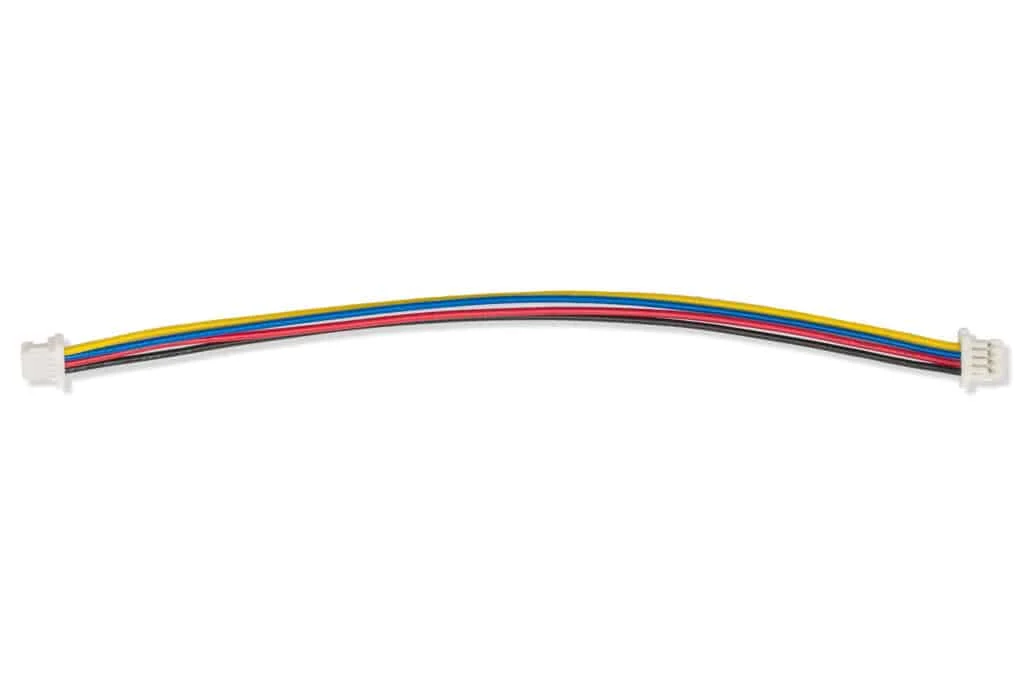
Qwiic cable
Qwiic (formerly easyC) compatible cables with connectors on both ends, available in various lengths.