INA219 - How it works
The INA219 is an integrated circuit by Texas Instruments. When using our board, you are essentially communicating directly with the onboard INA219 via I2C communication.
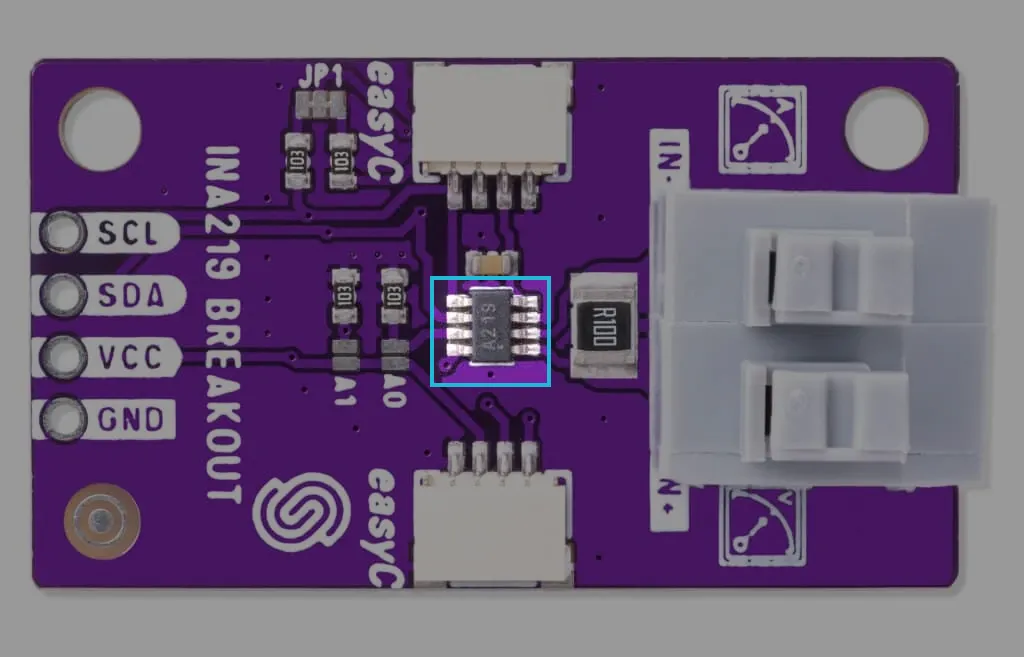
Datasheet
For an in-depth look at technical specifications, refer to the official INA219 Datasheet:
INA219 Datasheet
Detailed technical documentation for the INA219 sensor
How the sensor works
The INA219 is a small electronic sensor that measures how much electric current is flowing through a wire and how much voltage is present in a circuit. It’s super useful in electronics because it lets us monitor power usage in devices such as robots, batteries, and solar panels.
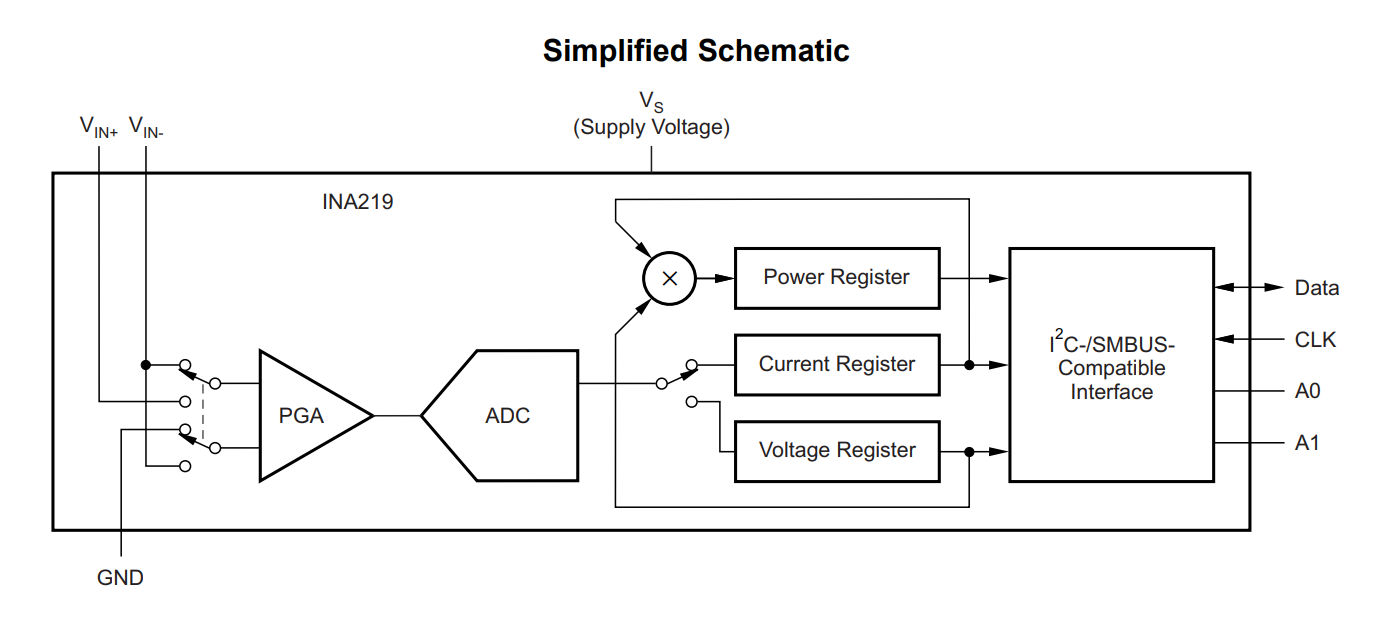
It is a current shunt and power monitor with an I2C interface. The device monitors both the shunt voltage drop and the bus supply voltage, with programmable conversion times and filtering. A programmable calibration value, combined with an internal multiplier, enables direct readouts of current in amperes. An additional multiplying register calculates power in watts.
I2C communication
The INA219 uses the I2C protocol to communicate with a microcontroller.
Writing to a register begins with the first byte transmitted by the microcontroller. This byte is the I2C address. The INA219 then acknowledges the receipt of a valid address. The next byte transmitted by the microcontroller is the address of the register to which data will be written. This register address value updates the register pointer to the desired register. The next two bytes are written to the register indicated by the register pointer. The INA219 acknowledges receipt of each data byte. The microcontroller may terminate data transfer by generating a START or STOP condition.