Ltr 507 – How it works
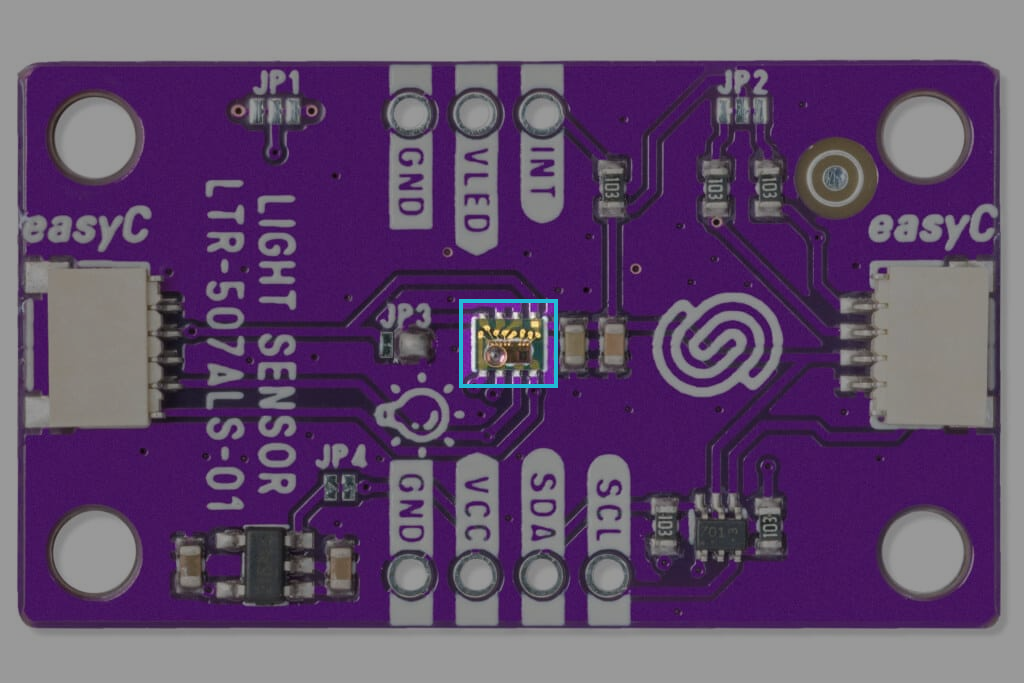
The LTR-507ALS-01 is an integrated I2C digital light sensor (ALS) and proximity sensor (PS) with a built-in LED driver manufactured by Lite-On.
Datasheet
For an in-depth look at the technical specifications, refer to the official LTR-507 Datasheet:
LTR-507 Datasheet
Detailed technical documentation for the LTR-507 sensor
How the Sensor Works
The LTR-507 is a highly efficient ambient light and proximity sensor designed for low power consumption and precise measurements in a compact form factor. It integrates a photodiode, an analog-to-digital converter (ADC), and a digital output interface, making it ideal for applications in energy-efficient systems, smart lighting, and proximity sensing.
-
Ambient Light Sensing – The LTR-507 features a photodiode that measures the intensity of ambient light. The sensor then converts this analog signal into a digital output using its onboard ADC, delivering precise lux measurements ranging from 0 to 65,535 lux. This makes the sensor perfect for applications requiring dynamic light adjustments based on environmental lighting conditions.
-
Proximity Sensing – The LTR-507 uses infrared (IR) light to detect objects within its proximity range (up to 20 cm). The sensor emits IR light, and the photodiode measures the amount of reflected light to calculate the distance to nearby objects, providing accurate proximity sensing for various applications.
-
Signal Processing and Output – After collecting data, the LTR-507 processes the light and proximity readings internally. The sensor provides the processed data through the I2C interface, ensuring easy integration with microcontrollers like Arduino or Raspberry Pi.
I2C Communication
The LTR-507ALS-01 sensor utilizes I2C (Inter-Integrated Circuit) communication to transmit data between the sensor and a microcontroller. I2C operates with two main lines: SDA for data transfer and SCL for clock synchronization.
As a follower device, the LTR-507 responds to commands sent from the leader device. It has a configurable I2C address, allowing for easy communication. The leader device can request ambient light and proximity data, enabling the sensor to provide measurements of lux levels and the distance to nearby objects.