Relay - Overview
Relay board
The Relay board is an electronic switch that is activated by a signal sent from microcontroller. It's used in applications where it is needed to turn on and off a device that needs large current or voltage. It works both on AC and DC. It comes in 1, 2 or 4 channel version and it also comes in versions with I2C communication (only 1 and 2 channel versions) which is designed for seamless Qwiic (formerly easyC) connectivity—eliminating the need for soldering.
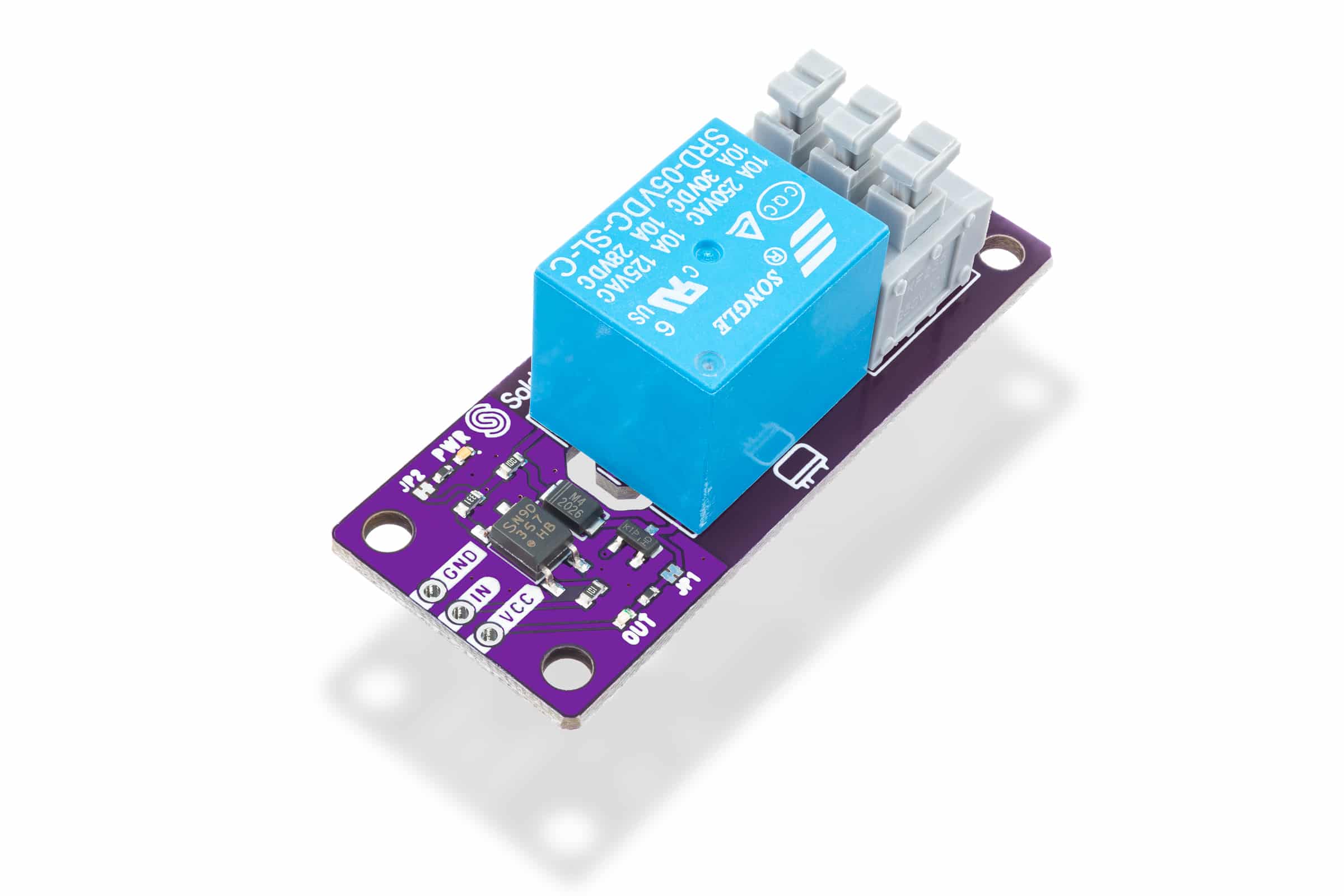
1 channel relay on board regular version
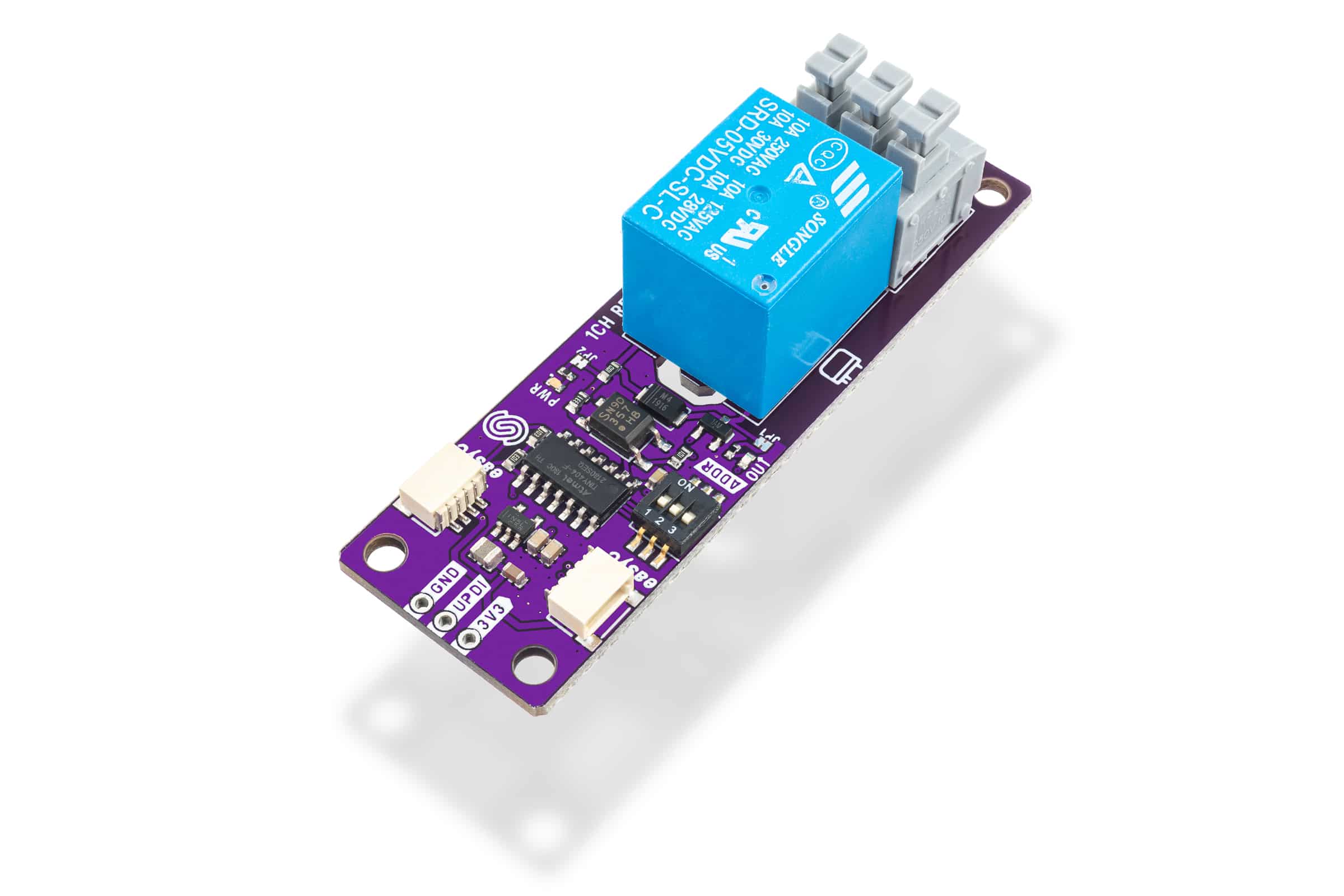
1 channel relay on board Qwiic version
Which products is this documentation for?
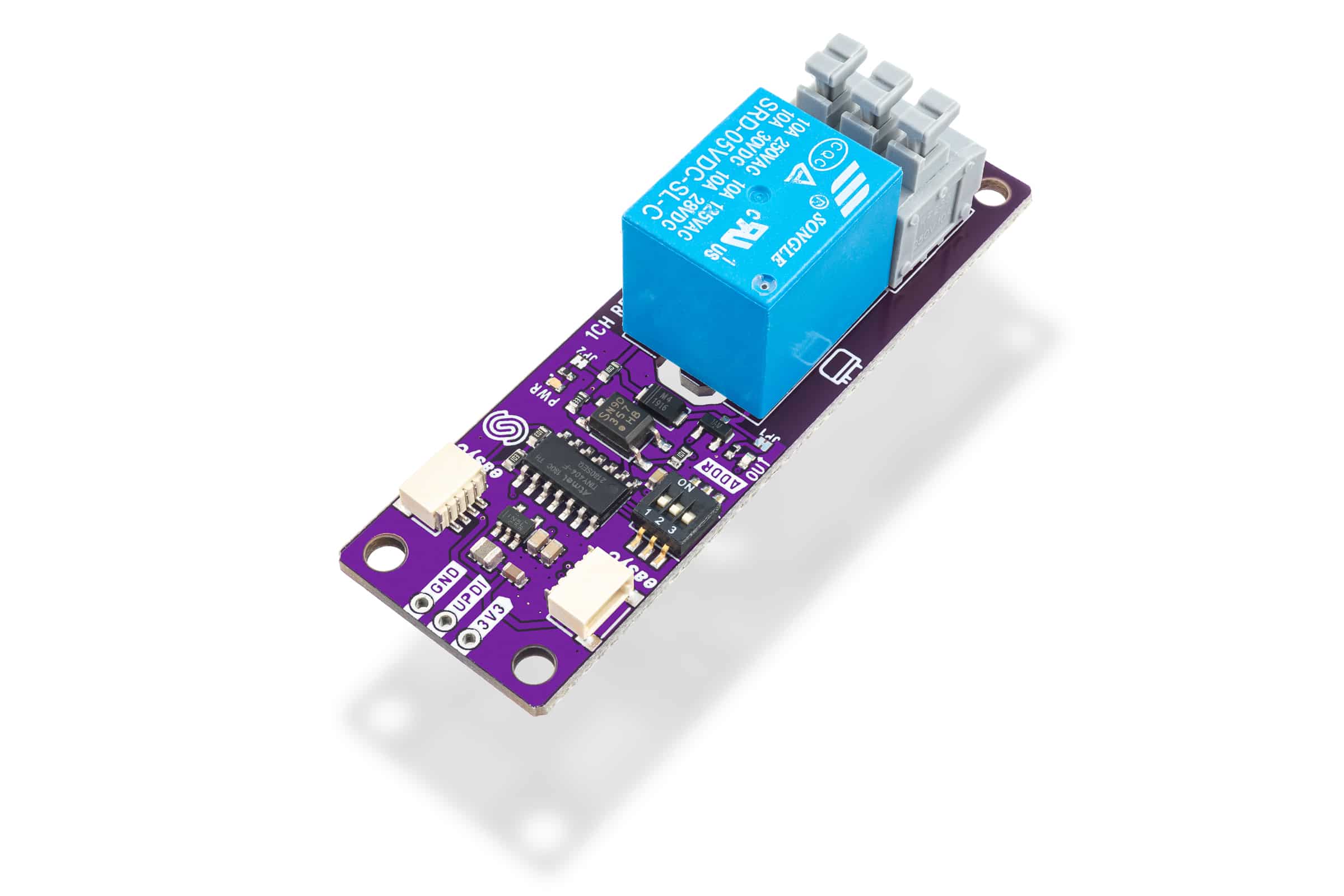
1-channel relay board with easyC
333021
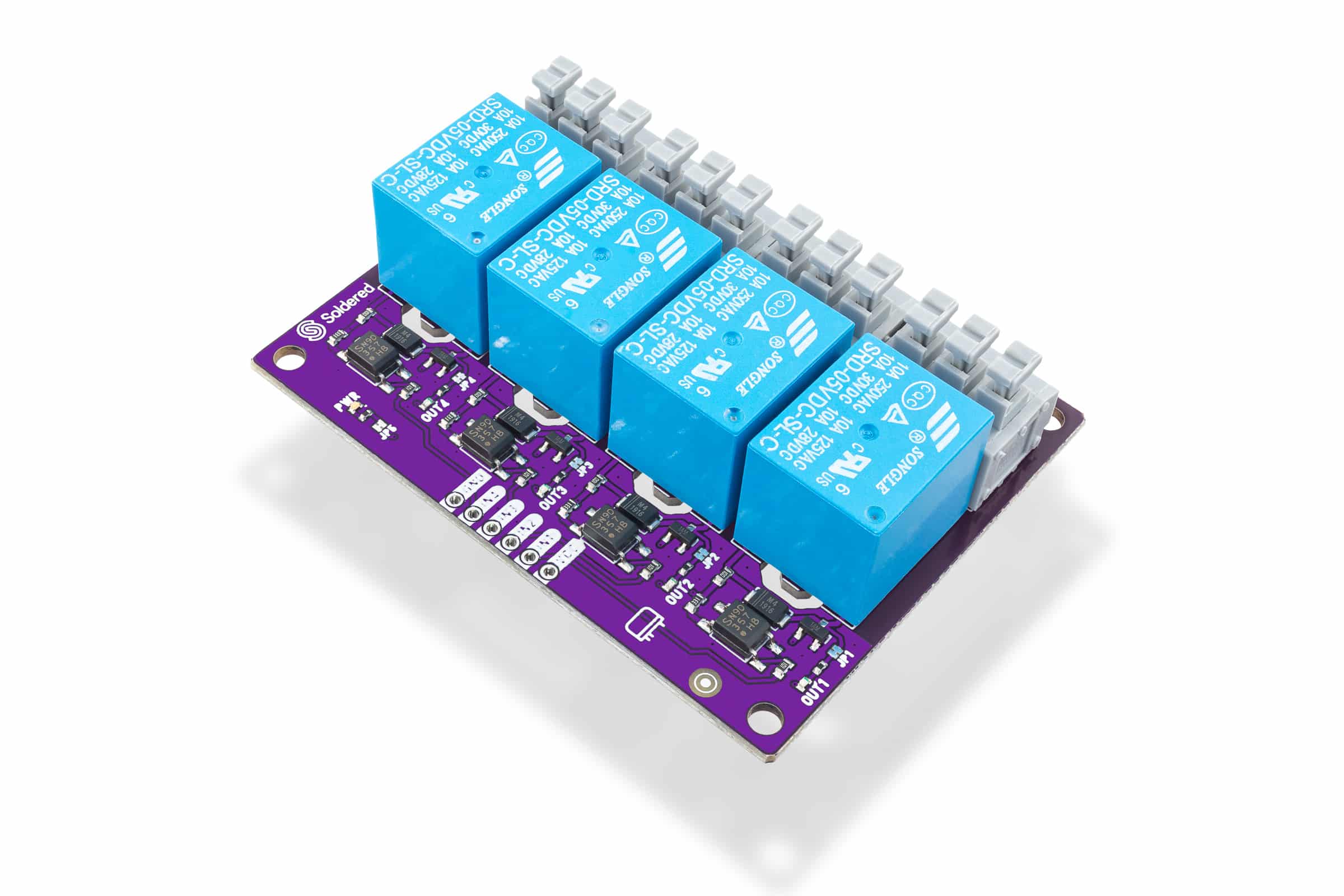
4-channel relay board
333022
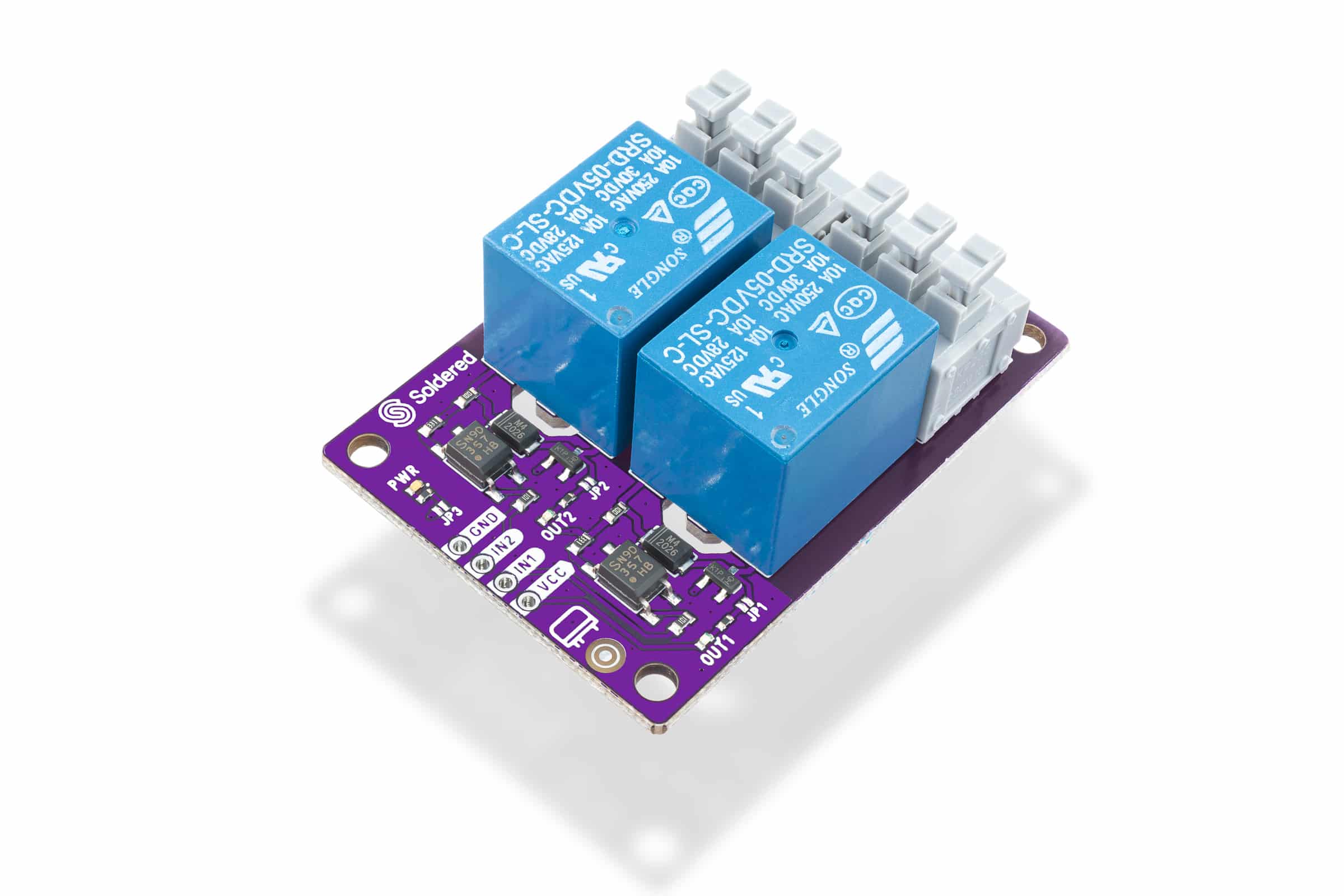
2-channel relay board
333023
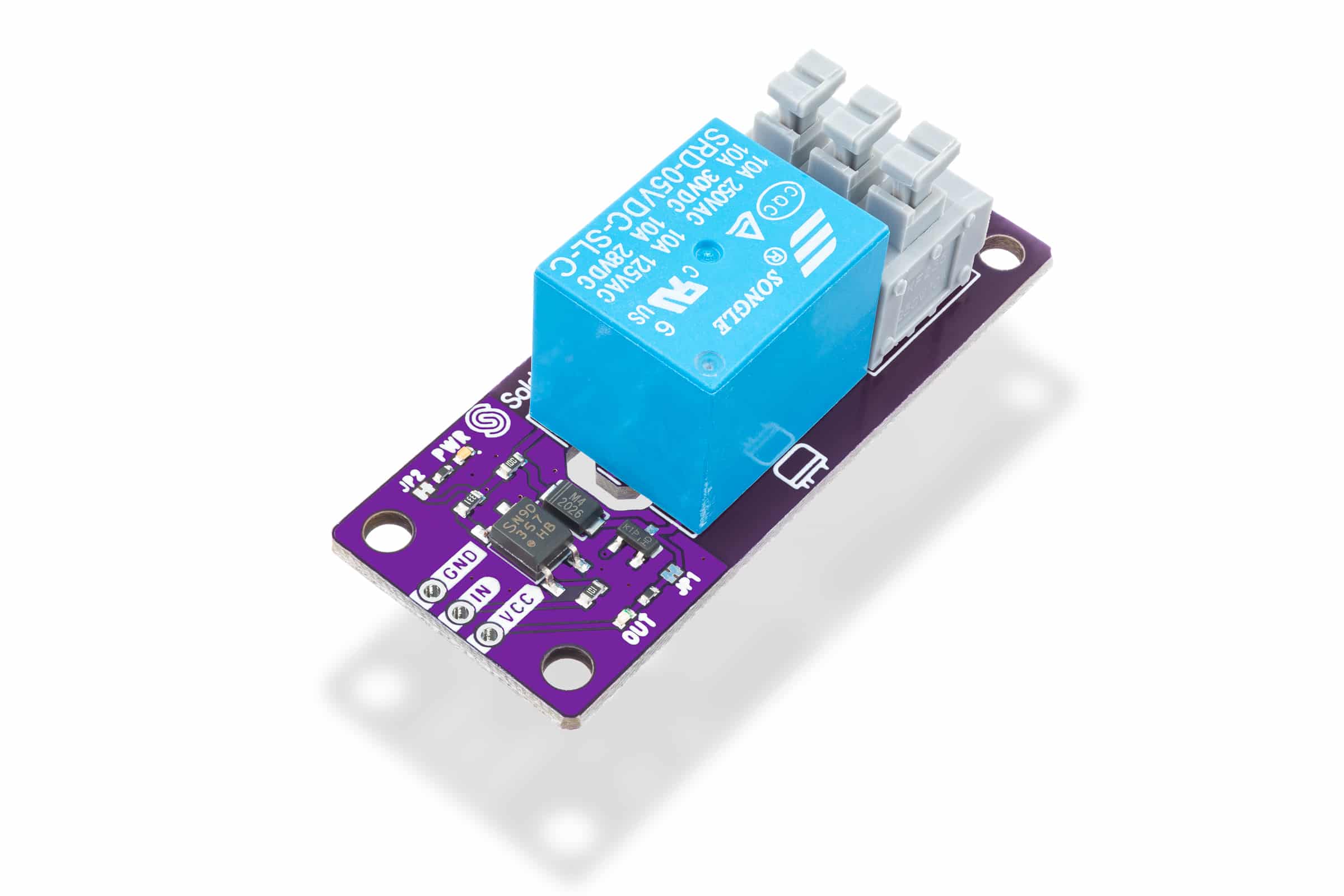
1-channel relay board
333024
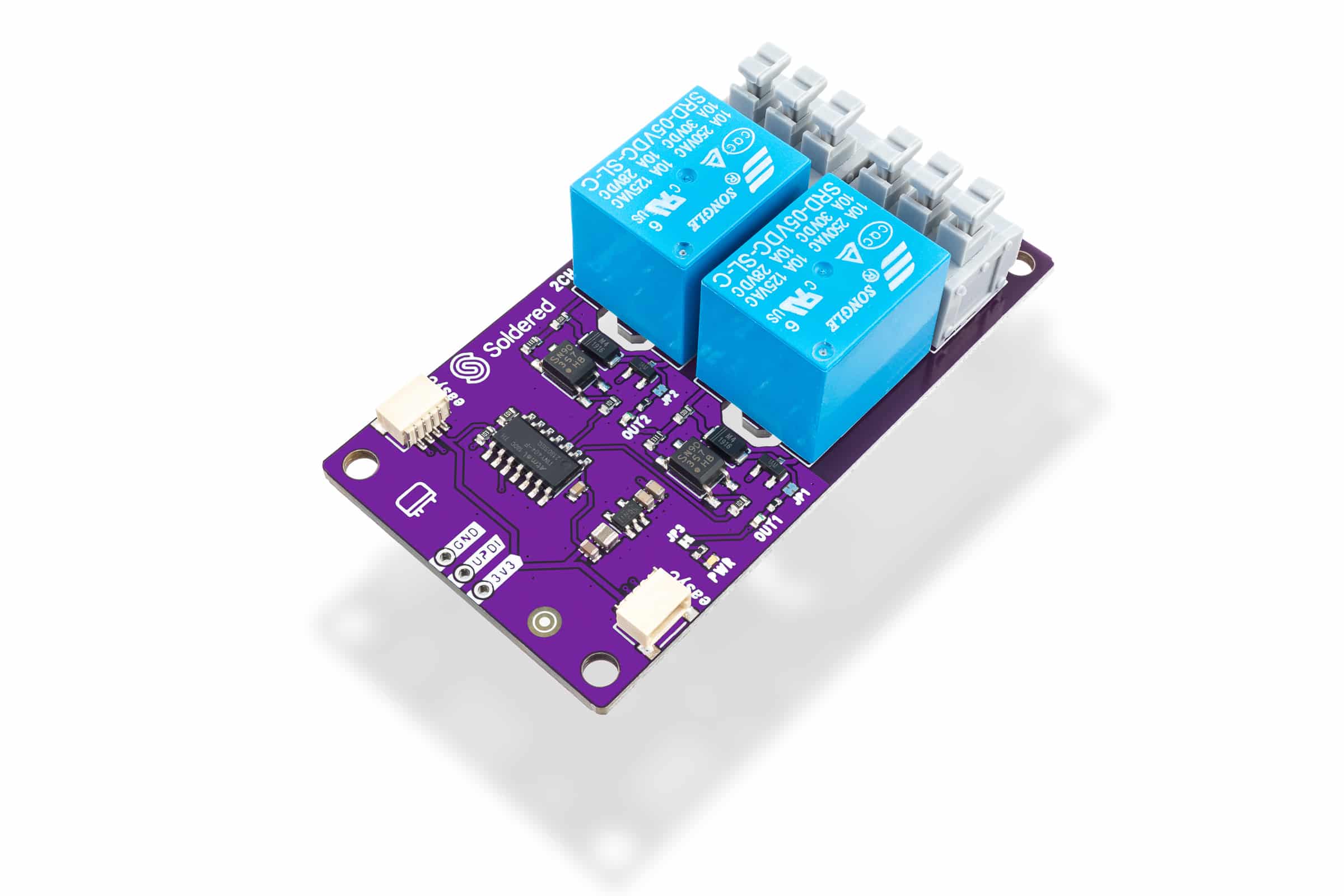
2-channel relay board with easyC
333025
Key Features
- Regular
- Logic voltage level: 3.3V - 5V
- Operating voltage: 5V
- Max. DC voltage and current: 30V, 10A
- Max. AC vltage and current: 250V, 10A
- Number of relays:
- 1 relay
- 2 relays
- 4 relays
- Dimensions:
- 54 x 22 mm (2.1 x 0.9 inch)
- 54 x 38 mm (2.1 x 1.5 inch)
- 54 x 70 mm (2.1 x 2.8 inch)
- Commuication: any digital pin
- Mounting: Four mounting holes for secure attachment
- Qwiic
- Logic voltage level: 3.3V - 5V
- Operating voltage: 5V
- Max. DC voltage and current: 30V, 10A
- Max. AC vltage and current: 250V, 10A
- Number of relays:
- 1 relay
- 2 relays
- Dimensions:
- 70 x 22 mm (2.8 x 0.9 inch)
- 70 x 40 mm (2.8 x 1.6 inch)
- Commuication: I2C
- Connector: 2 × Qwiic (formerly easyC) ports (plug-and-play, no soldering needed)
- Mounting: Four mounting holes for secure attachment
You may also need
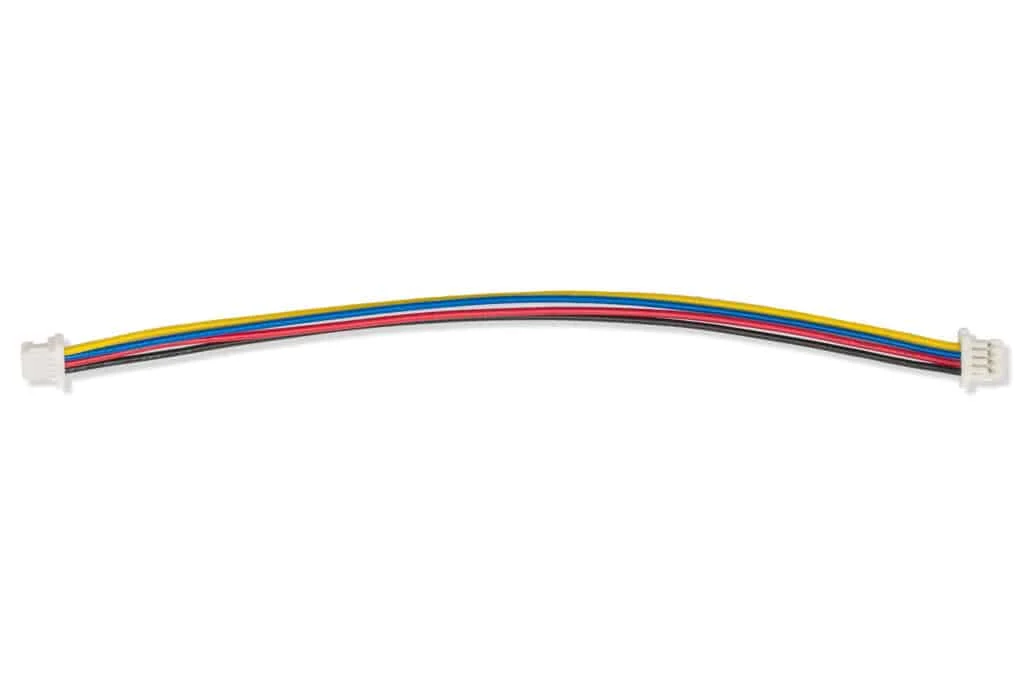
Qwiic cable
Qwiic (formerly easyC) compatible cables with connectors on both ends, available in various lengths.