Capacitive Soil Sensor - How it works
The Capacitive Soil Sensor is a robust and corrosion-resistant device for measuring soil moisture. Unlike resistive sensors that rely on exposed metal probes, this sensor uses a capacitive sensing principle, resulting in longer lifespan and more reliable measurements in harsh environments.
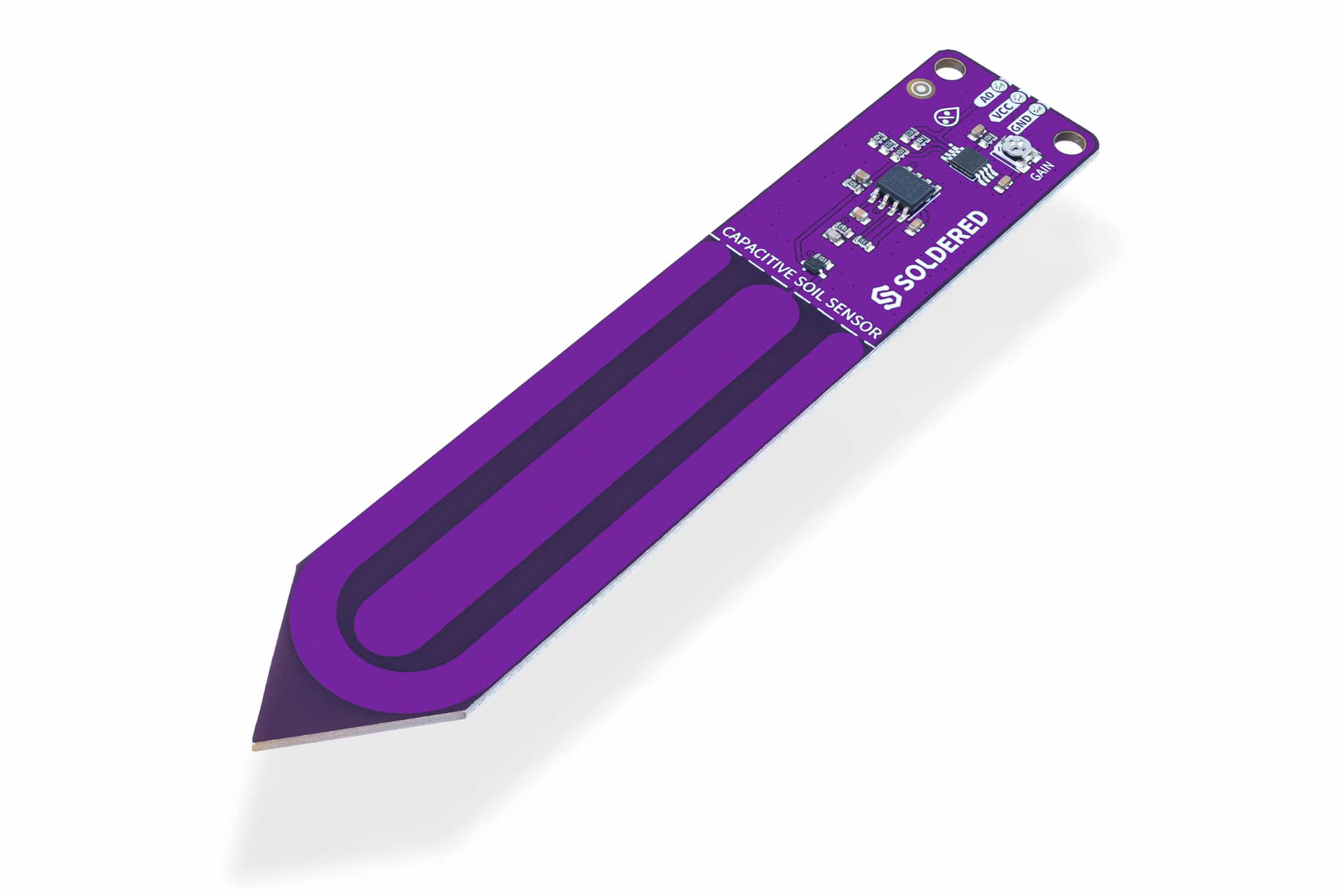
What’s on board?
This sensor is based on the TLC555CD IC – a CMOS version of the popular 555 timer from Texas Instruments. It’s used to generate a frequency that changes based on the capacitance of the soil. As soil moisture increases, the capacitance of the sensing area increases, altering the output frequency or voltage.
TLC555CD Datasheet
Official datasheet for the TLC555CD timer IC used in the capacitive soil sensor.
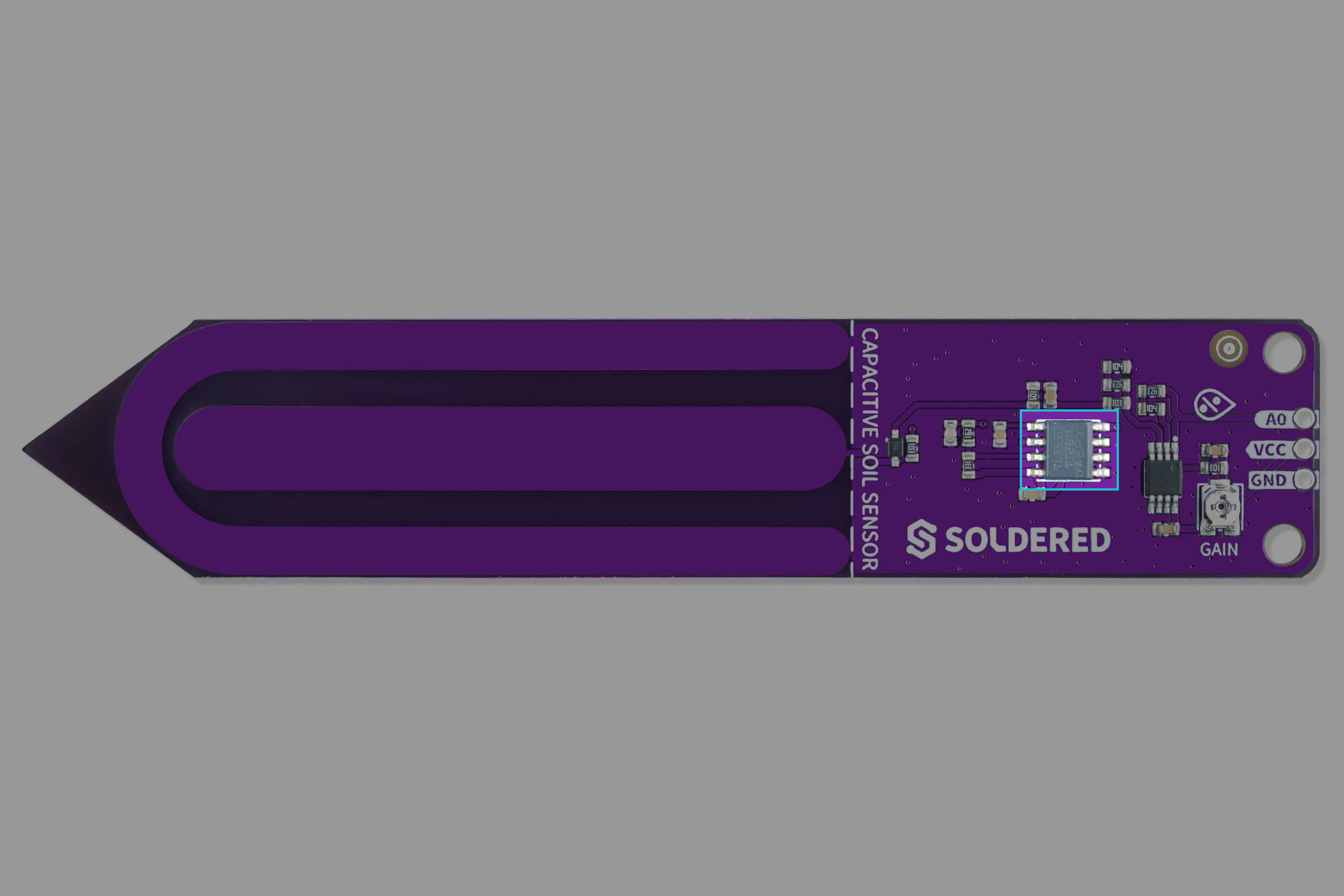
How it works
The capacitive soil moisture sensor detects changes in soil moisture using a capacitive pad. The pad forms one plate of a capacitor, while the surrounding soil acts as the dielectric. Moisture changes the dielectric constant, affecting the capacitance.
This capacitance is part of an RC (resistor-capacitor) circuit controlled by the TLC555CD timer. As the soil moisture changes, the capacitance shifts, causing the output pulse width or analog voltage to vary. This change can be measured by a microcontroller's analog input pin.
Advantages over resistive sensors
- Corrosion-resistant: No exposed metal contacts
- More reliable over time: Ideal for long-term projects
- Better performance in chemically active soils