Bmp180 – How it works
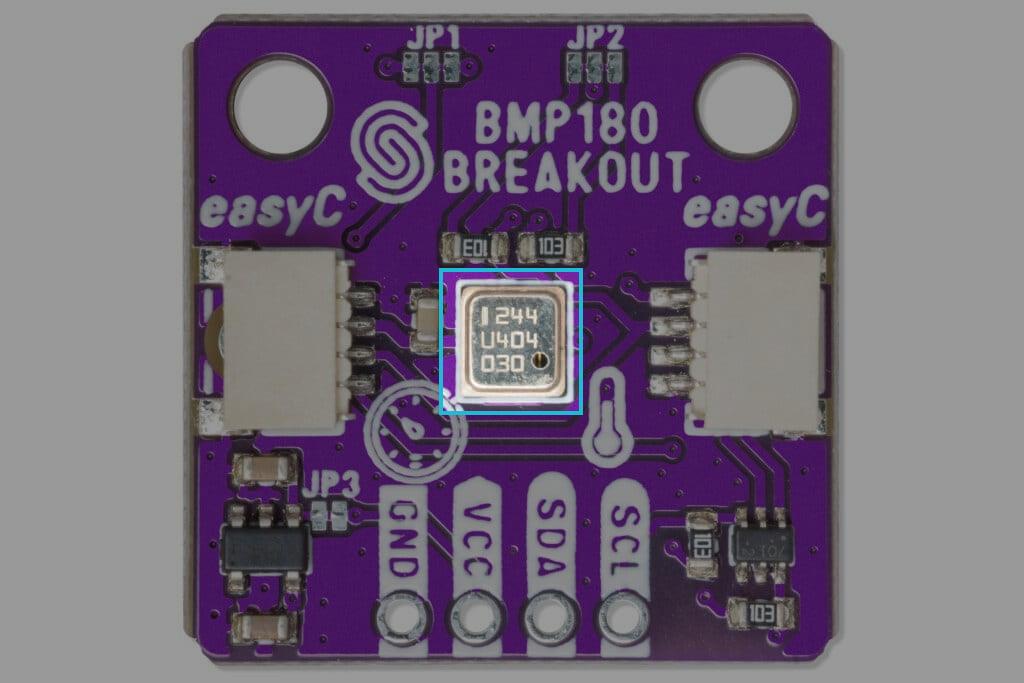
BMP180 is an integrated circuit by Bosch. When using our board, you are essentially communicating with the onboard BMP180 directly via I2C communication.
Datasheet
For an in-depth look at technical specifications, refer to the official BMP180 Datasheet:
BMP180 Datasheet
Detailed technical documentation for the BMP180 sensor
How the sensor works
The BMP180 is a pressure and temperature sensor that can also calculate altitude based on pressure.
The sensor takes measurements by using the piezoresistive effect to gather information.
The piezoresistive effect is a change in the electrical resistivity of a material (e.g., semiconductor, metal) when mechanical strain is applied. The electrical resistance change is due to two causes: a change in geometry and a change in conductivity of the material. The change in resistance is much more pronounced for semiconductors than for metals.
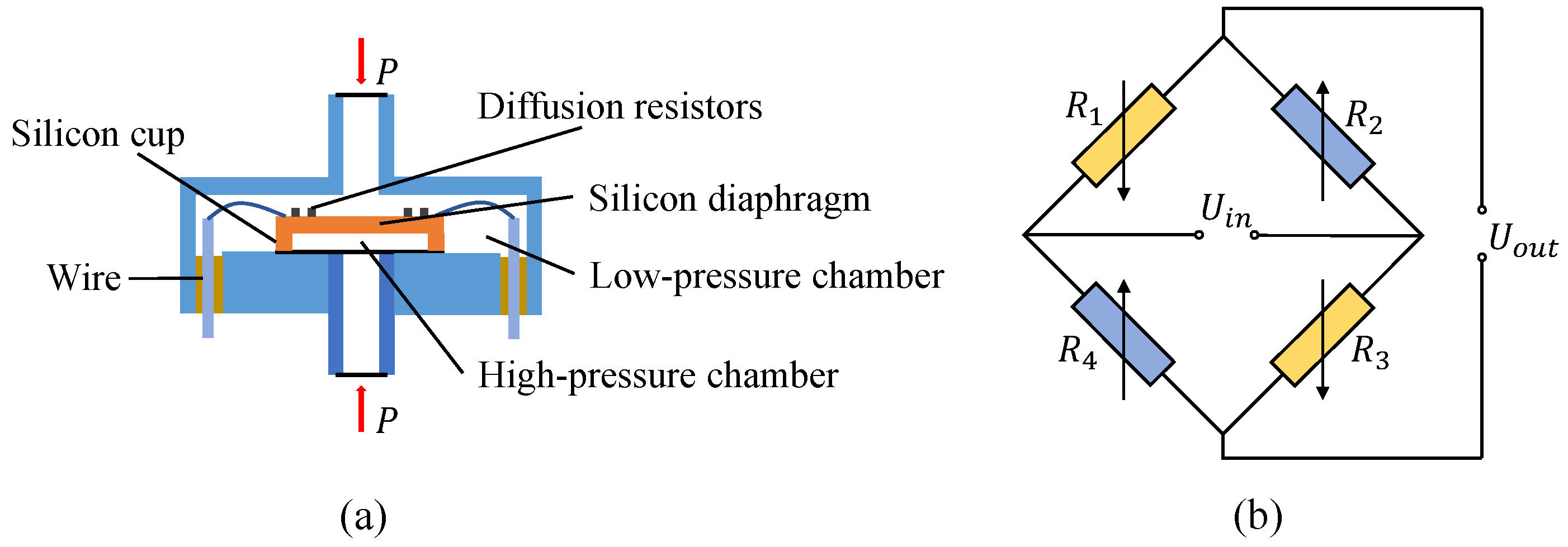
Four Si-resistors are diffused into a semiconductor membrane and connected together to form a Wheatstone bridge. Under the influence of pressure, the diaphragm deforms, thereby affecting the electrical resistance of the four Si-resistors. The change in resistance is proportional to the applied pressure.
I2C communication
The BMP180 uses the I2C protocol to communicate with a microcontroller. It operates with a fixed I2C address of 0x77 and supports a speed of up to 3.4MHz for rapid data transmission.
Upon request, the sensor responds with pressure values in a 16 to 19 bit format and temperature values in a 16 bit format.