Simple Soil Sensor - Measuring and detectiing humidity with regular sensor (example)
This page contains a simple example with function documentation on how to detect and measure humidity of the soil using the sensor.
Initialization
To use the sensor, first include the required library, create the sensor object (SimpleRainSensor), and initialize it in the setup() function. You can use the return value of begin() to check if everything is connected correctly.
#include "Simple-soil-sensor-easyC-SOLDERED.h"
#define ANALOG_PIN 15

SimpleSoilSensor sensor(ANALOG_PIN);

void setup(){
  sensor.begin();
}
//...
SimpleSoilSensor sensor
Creates SimpleSoilSensor object
Returns value: none
sensor.begin()
Initializes the sensor.
Returns value: Returns true if initialization is successful, false otherwise.
Measuring with both digital and analog output
In this library, there are two options for displaying the analog value: for a percentage value, call the getValue() function, and for the raw value, call the getRawValue() function.
#include "Simple-soil-sensor-easyC-SOLDERED.h"
#define ANALOG_PIN 15

SimpleSoilSensor sensor(ANALOG_PIN);

#define CALIBRATION_RESISTANCE_TIP_IN_WATER  15000
#define CALIBRATION_RESISTANCE_FULL_IN_WATER 7000


void setup(){
  Serial.begin(115200);

    // Initialize the sensor
    sensor.begin();

    // Sensor will work just fine if it is not calibrated
    // but since it is relying on resistance of water and
    // and water significantly changes resistance if it is
    // filled with particles, it smart idea to calibrate sometimes.
    // For calibration it is needed to measure resistance of sensor
    // when only tip is in water(about 5mm of sensor) and when
    // pads are completely in water and write them in
    // CALIBRATION_RESISTANCE_TIP_IN_WATER and CALIBRATION_RESISTANCE_FULL_IN_WATER
    sensor.calibrate(CALIBRATION_RESISTANCE_TIP_IN_WATER, CALIBRATION_RESISTANCE_FULL_IN_WATER);

    // If different microcontroller with different bit width
    // is used, it should be set using this function
    sensor.setADCWidth(12);
}

void loop(){
  Serial.print("Raw value of sensor: "); // Print information message
    Serial.print(sensor.getValue());       // Prints percent value of soil sensor
    Serial.print("% ");
    Serial.println(sensor.getRawValue()); // Prints raw value of soil sensor

    Serial.print("Resistance of sensor: "); // Print information message
    Serial.print(sensor.getResistance());   // Prints resistance of soil sensor
    Serial.println(" Ohms.");               // Print information message

    Serial.print("Humidity: ");         // Print information message
    Serial.print(sensor.getHumidity()); // Prints raw value of soil sensor
    Serial.println(" %.");              // Print information message

    // Wait a bit before next reading
    delay(500);
}
sensor.getValue()
Returns the percent value of the soil humidity sensor.
Returns value: Returns a float representation of the rain humidity sensor value in percentage.
sensor.getRawValue()
Returns the raw ADC value.
Returns value: Returns an integer representation of the rain sensor value.
sensor.getResistance()
Returns the calculated resistance.
Returns value: Returns a float representation of the rain sensor resistance.
sensor.getHumidity()
Returns the percent value of the soil humidity.
Returns value: Returns a float representation of the soil humidity in percentage.
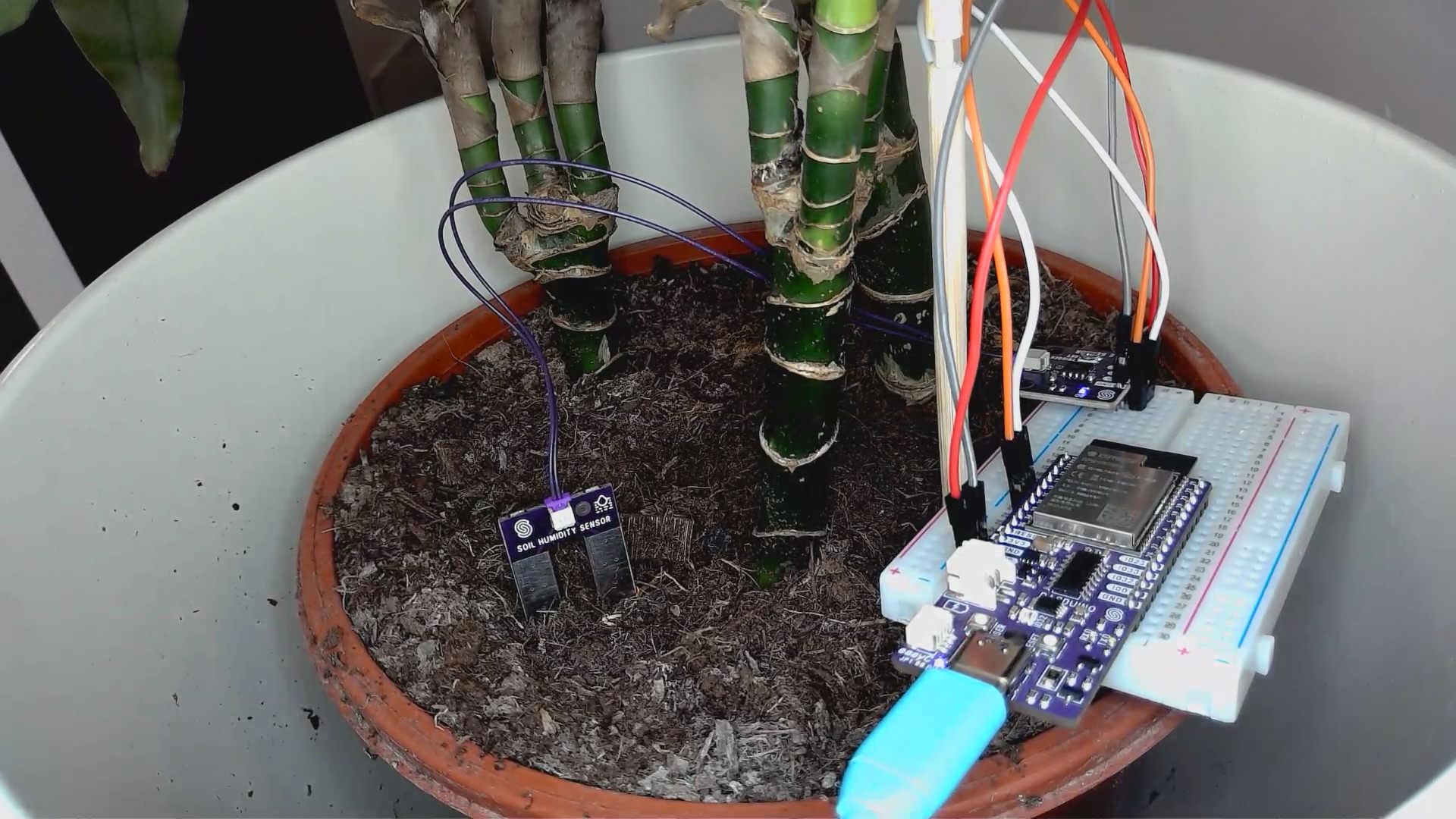
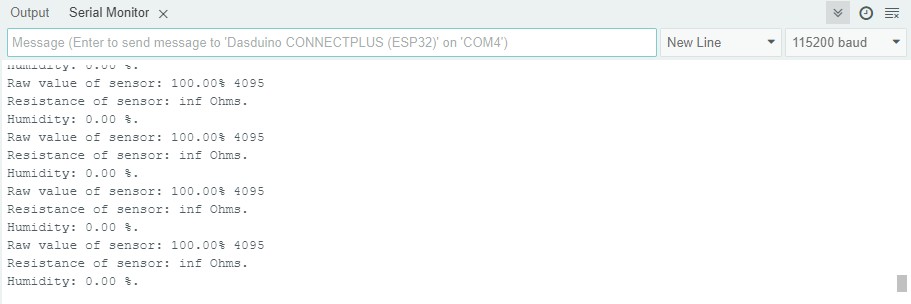
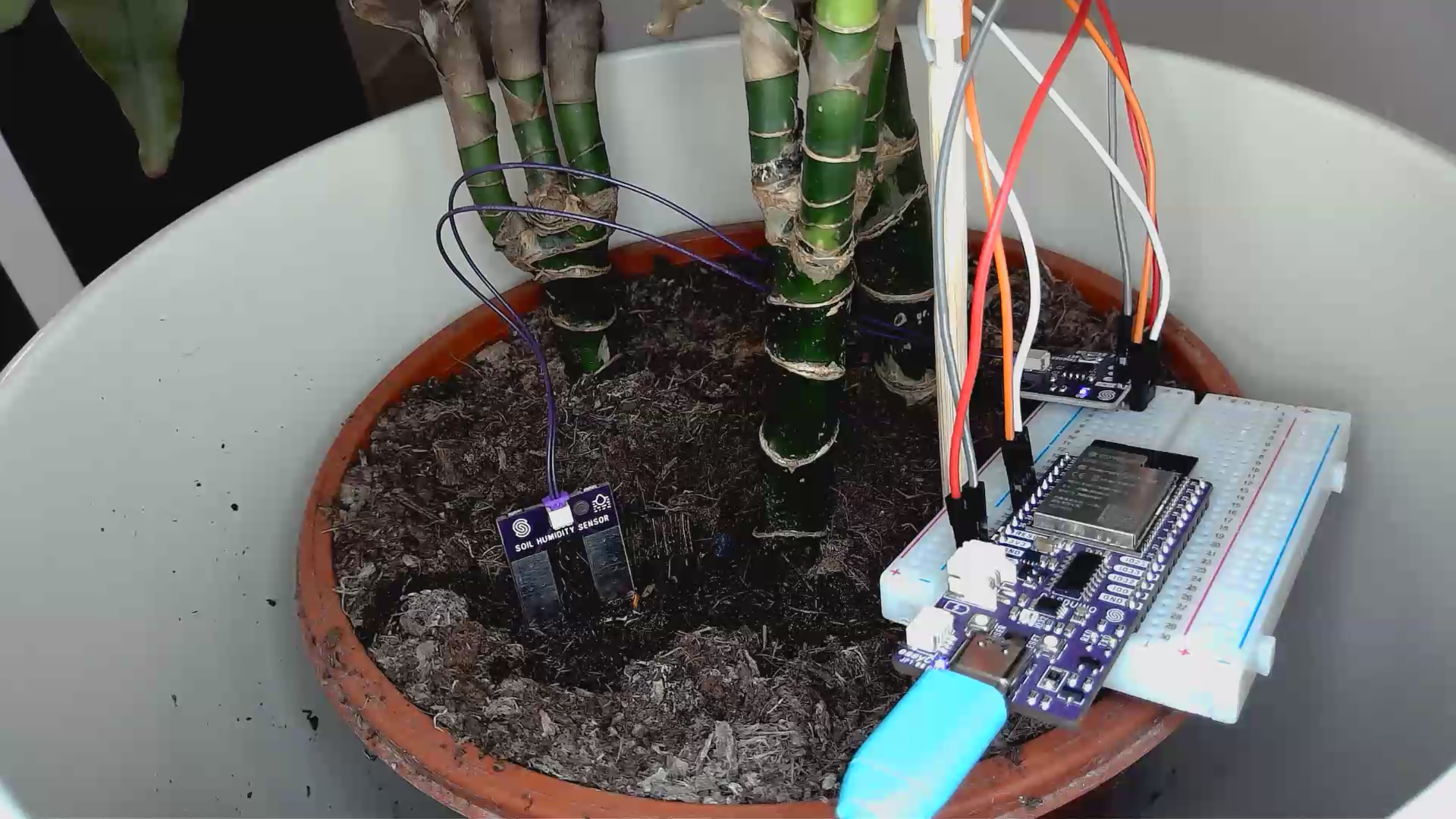
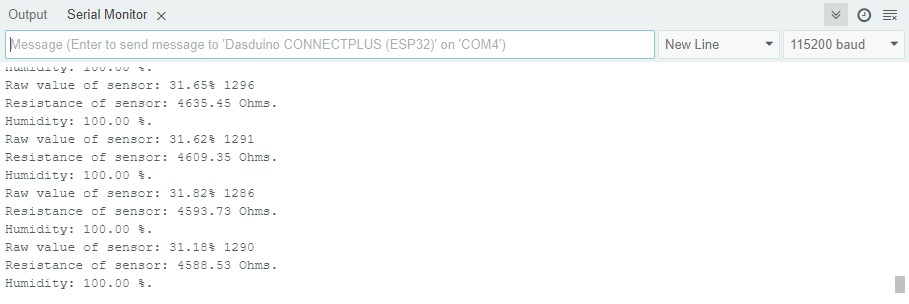
Full example
Try all of the functions mentioned above in the full example below:
Read_values_native.ino
Example for using the digital and analog read functions for Simple soil humidity sensor.