Hardware Design
Inkplate 4 TEMPERA is an open-source product, and we're excited to share its hardware design with the community. This section includes KiCad project files, schematics, board layouts, and other technical resources to help you understand, customize, or extend the device's capabilities.
Basic Overview
Inkplate 4 TEMPERA is built around a 3.8″ e-paper display and is powered by an ESP32 microcontroller, which offers built-in Wi-Fi and Bluetooth support. Its compact size makes it ideal for portable or embedded projects that require high-contrast, ultra-low-power display capabilities.
Key features include:
- A capacitive touchscreen for direct interaction
- A 64-step adjustable frontlight for visibility in any lighting condition
- MicroSD card slot for external storage
- USB-C port for programming and power
- Li-ion battery support with onboard charging (MCP73831) and power management
The board layout is optimized for enclosures and integration into compact applications.
Components Overview
The following images show the front and back of the Inkplate 4 TEMPERA board, with major components visible for easy identification:
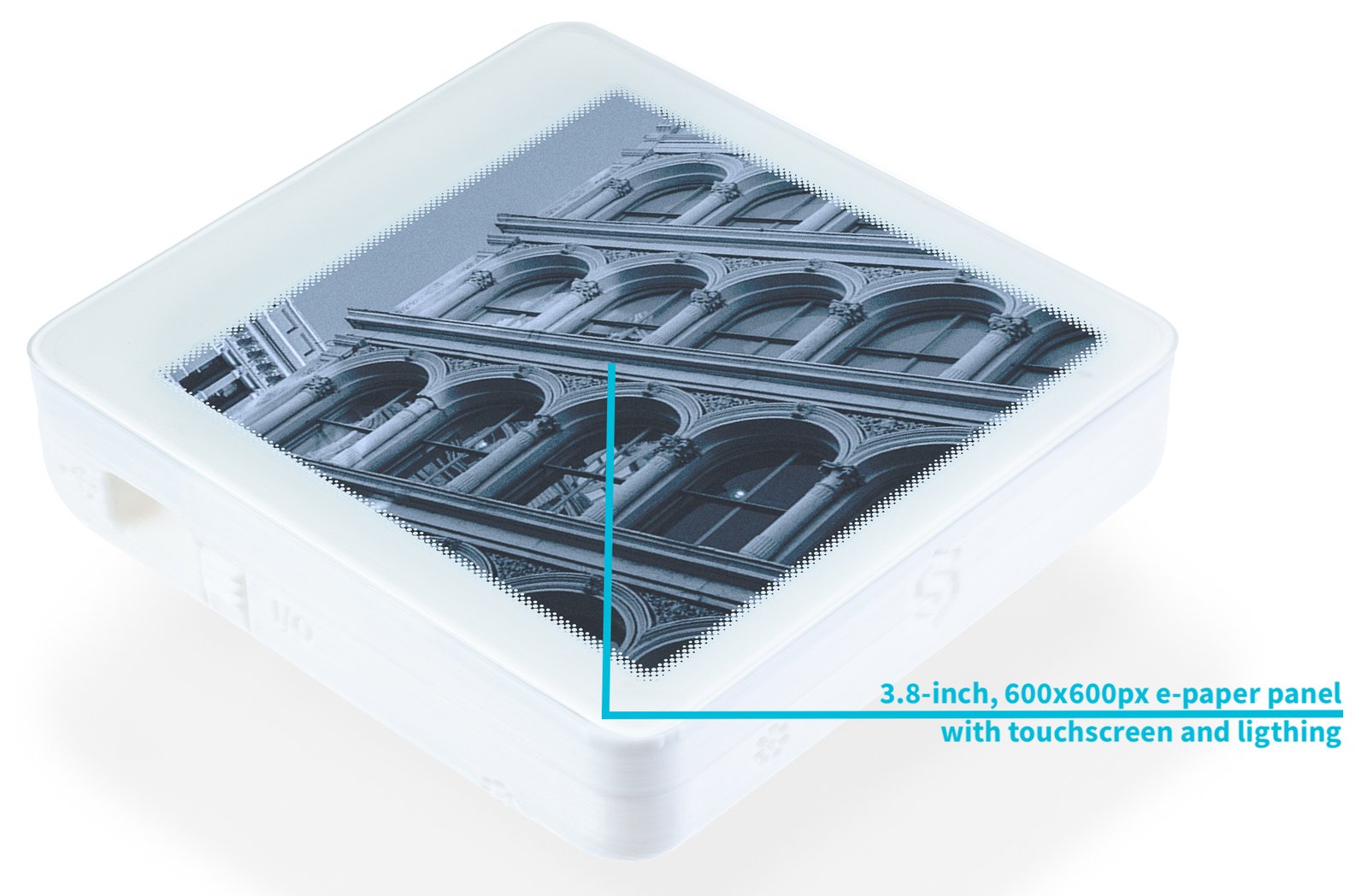
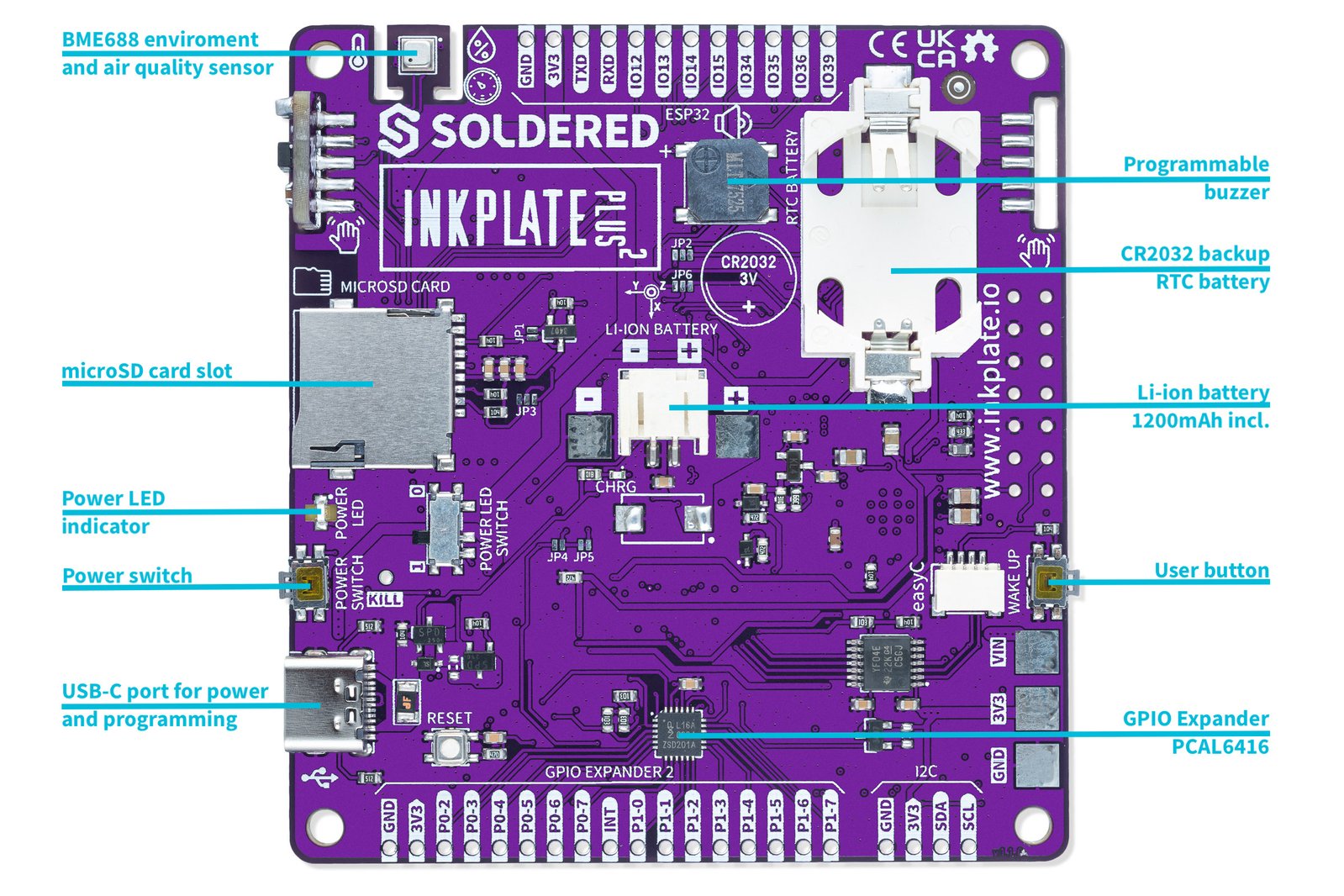
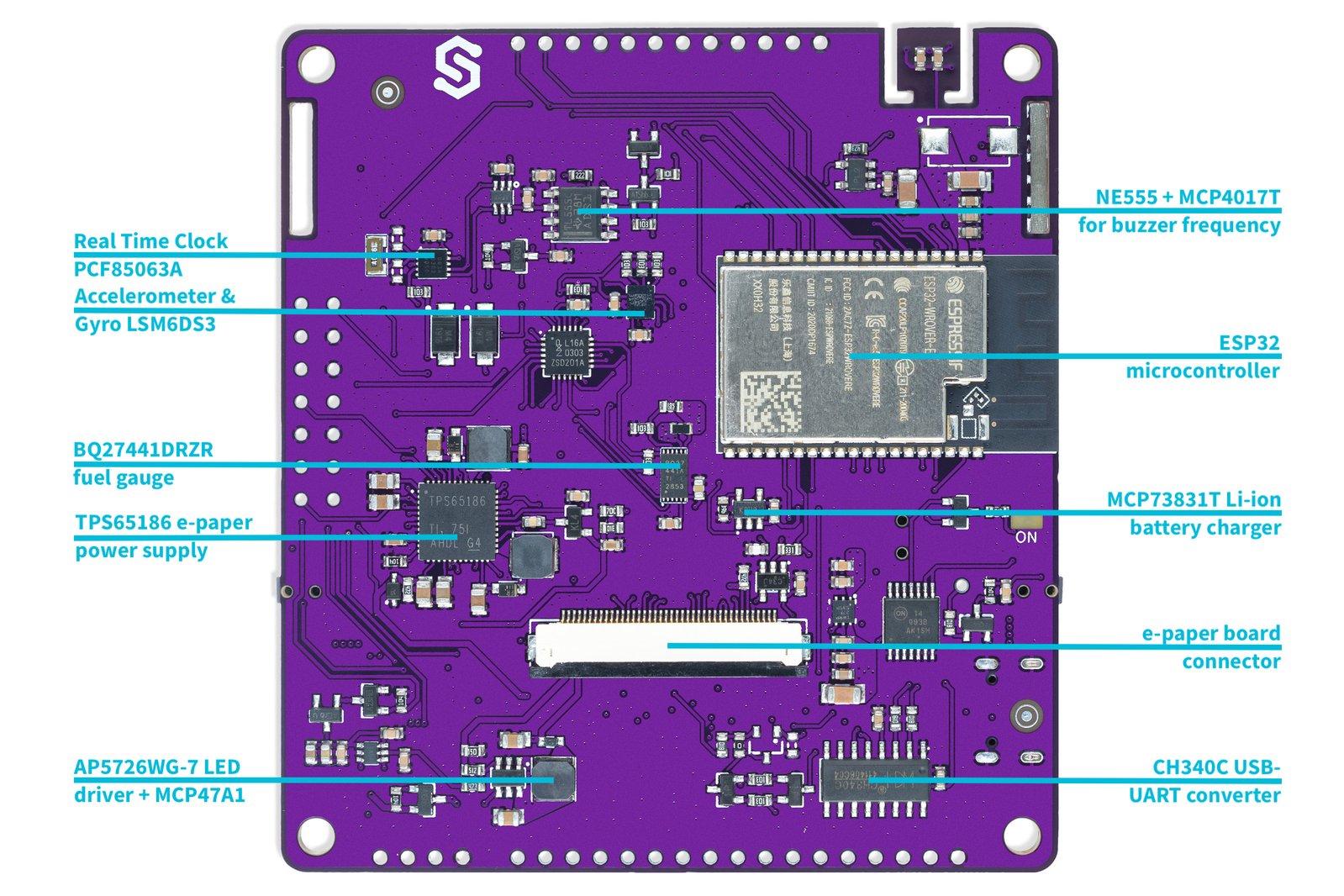
E-Paper Panel: ED038TH2
Inkplate 4 TEMPERA uses the ED038TH2 e-paper panel — a compact 3.8″ display from E Ink. This model delivers high pixel density and fast refresh performance, making it suitable for interactive applications and rapid screen refreshes while retaining the low power consumption that e-paper is known for.
| Specification | Details |
|---|---|
| Panel Model | ED038TH2 |
| Diagonal Size | 3.8 inches |
| Resolution | 600 × 448 pixels (200+ PPI) |
| Grayscale Levels | 8 (3-bit mode) |
| Touchscreen | Yes, capacitive |
| Frontlight | Yes, adjustable in 64 brightness steps |
| Partial Updates | Supported |
| Full Refresh Time | ~1.0 second (typical) |
| Fast Refresh Time | ~200 ms (1-bit mode) |
| Interface | Parallel, 24-pin FPC |
| Voltage Supply | 3.3V (typical) |
| Operating Temperature | 0°C to 50°C |
| Storage Temperature | -25°C to 70°C |
Let me know if you'd like additional documentation on jumpers, pinout diagrams, or firmware configuration pages.