Overview
IIS2DULPX Accelerometer breakout
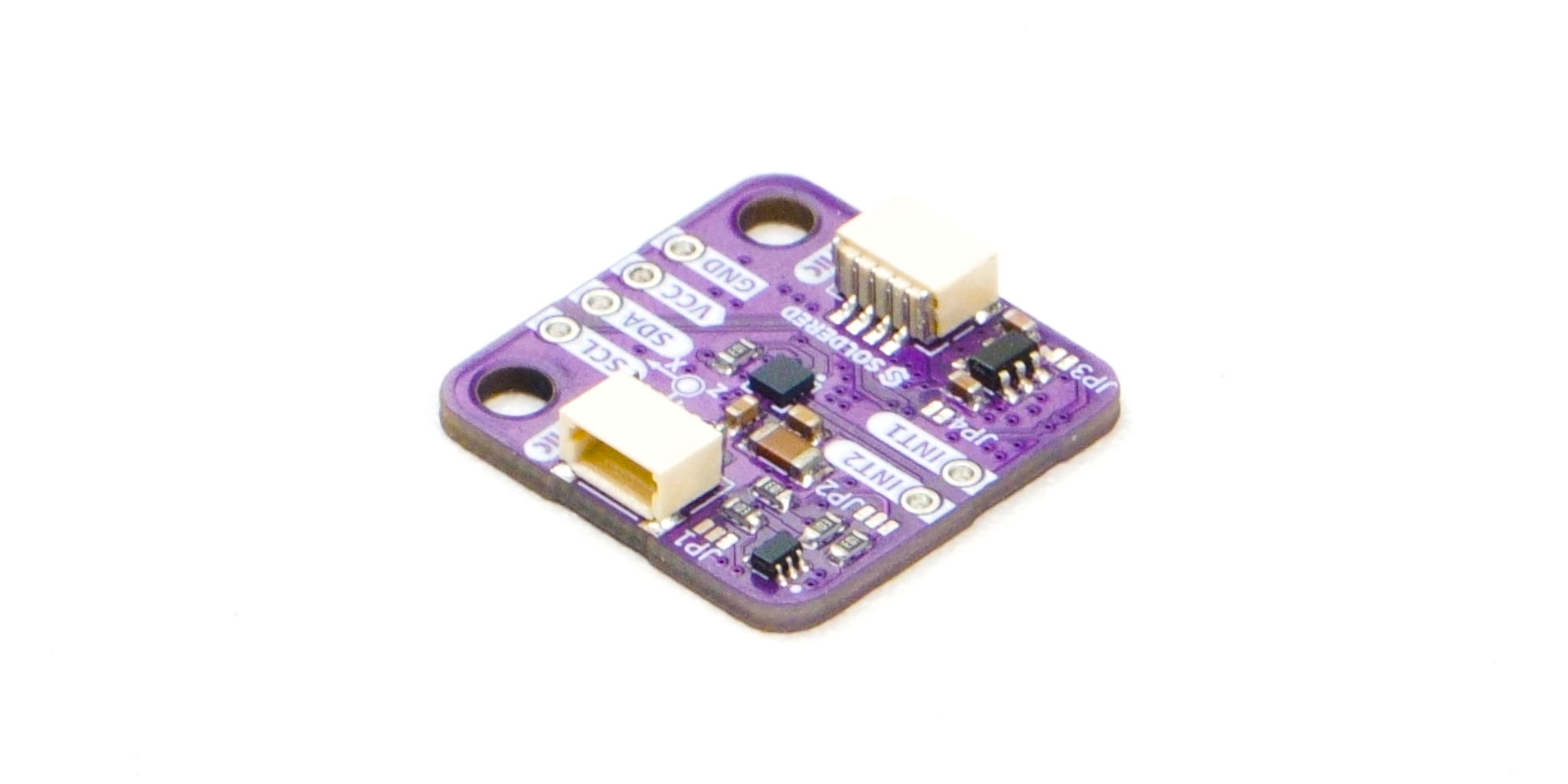
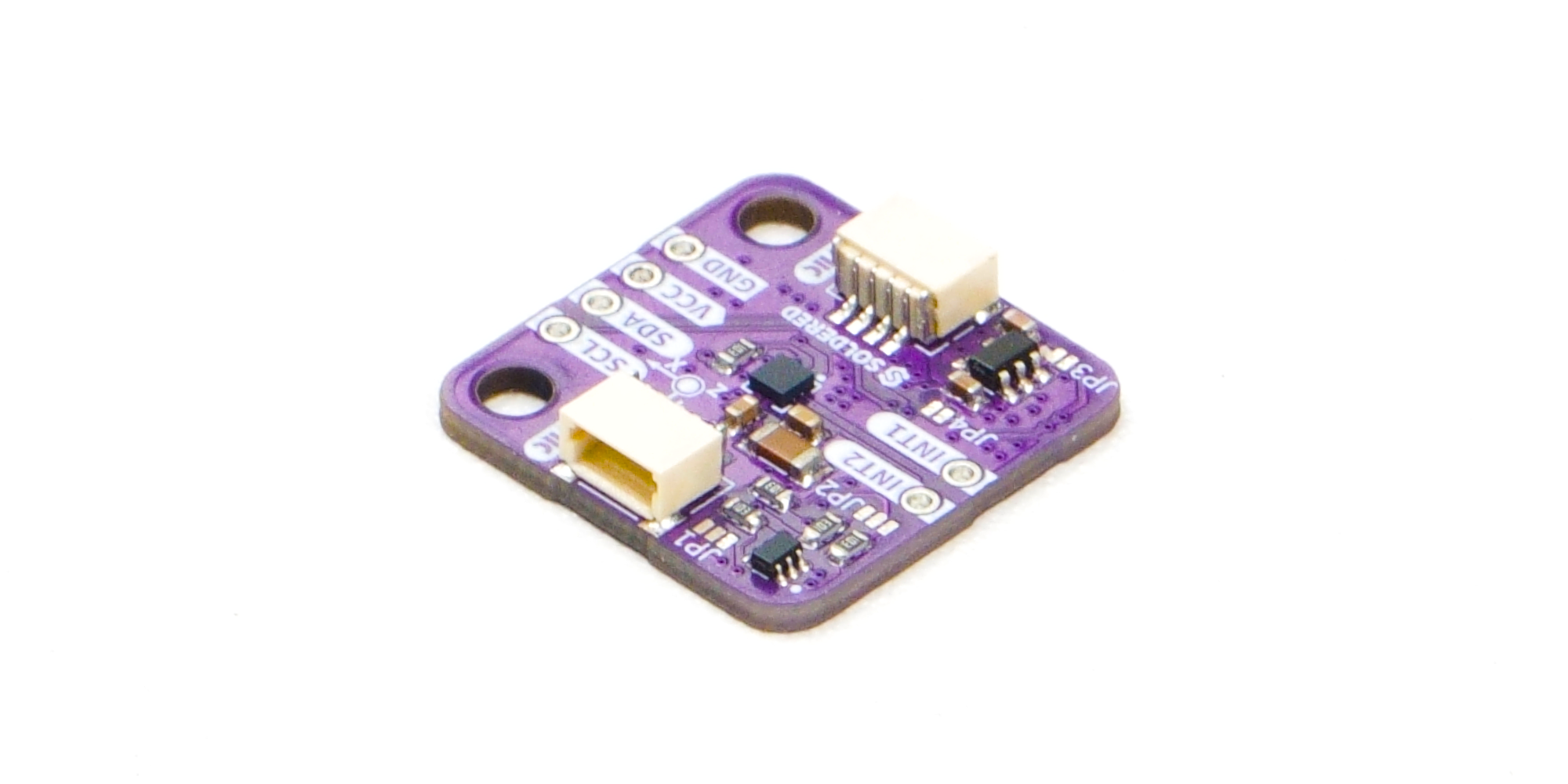
The IIS2DULPX Accelerometer Breakout is a compact board built around the IIS2DULPX — an ultra-low-power 3-axis MEMS accelerometer from STMicroelectronics. It is capable of measuring acceleration across four selectable full-scale ranges (±2g, ±4g, ±8g, ±16g) and supports output data rates from 1.6 Hz up to 800 Hz, with three distinct power modes: Ultra Low Power, Low Power, and High Performance.
Beyond standard motion sensing, the IIS2DULPX also integrates a QVAR (charge variation) sensing channel, enabling applications such as capacitive touch detection, liquid level sensing, or electric field detection. On-chip features include wake-up detection, free-fall detection, single/double tap recognition, 6D/4D orientation detection, step counting, tilt detection, and configurable FIFO buffering for efficient data management.
The board includes 2 Qwiic (formerly easyC) connectors, making it easy to daisy-chain with other I2C peripherals and eliminating the need for soldering.
Which products is this documentation for?
IIS2DULPX Accelerometer breakout
333363
Key Features
- Measurement range: ±2g / ±4g / ±8g / ±16g (selectable)
- Output data rate:
- Ultra Low Power mode: 1.6 Hz, 3 Hz, 25 Hz
- Low Power mode: 6 Hz to 800 Hz
- High Performance mode: 6 Hz to 800 Hz
- Sensitivity: 0.061 mg/LSB (±2g) to 0.488 mg/LSB (±16g)
- QVAR sensing: On-chip charge variation sensing for touch and electric field detection
- On-chip features: Wake-up, free-fall, tap/double-tap, 6D/4D orientation, step counter, tilt, sleep detection
- FIFO buffer: Configurable FIFO for efficient data batching
- Communication: I2C (address 0x18)
- IC supply voltage: 1.62V to 3.6V (onboard regulator provides 5V compatibility)
- Power consumption: 3 µA (ULP) / 6.5 µA (LP) / 9.3 µA (HP) / 12 nA (deep power-down)
- Connector: 2 × Qwiic (formerly easyC) ports (plug-and-play, no soldering needed)
- Mounting: Two mounting holes for secure attachment
You may also need
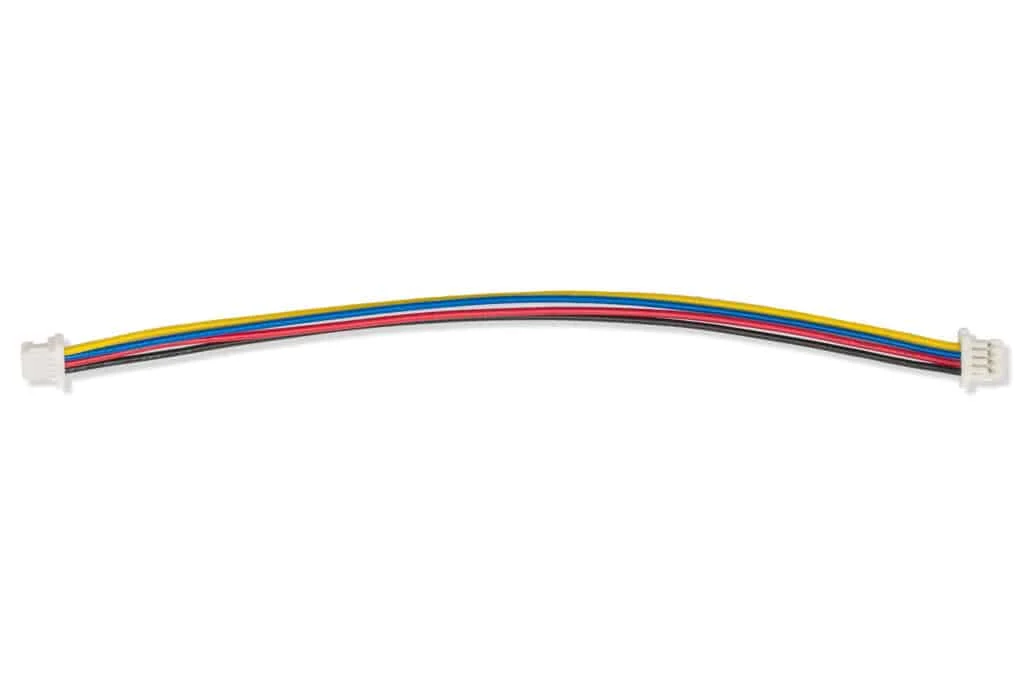
Qwiic cable
Qwiic (formerly easyC) compatible cables with connectors on both ends, available in various lengths.