ESPFlash Programmer - How it works
The ESPFlash Programmer uses the onboard CH340C chip by WCH to convert the USB protocol into serial communication.
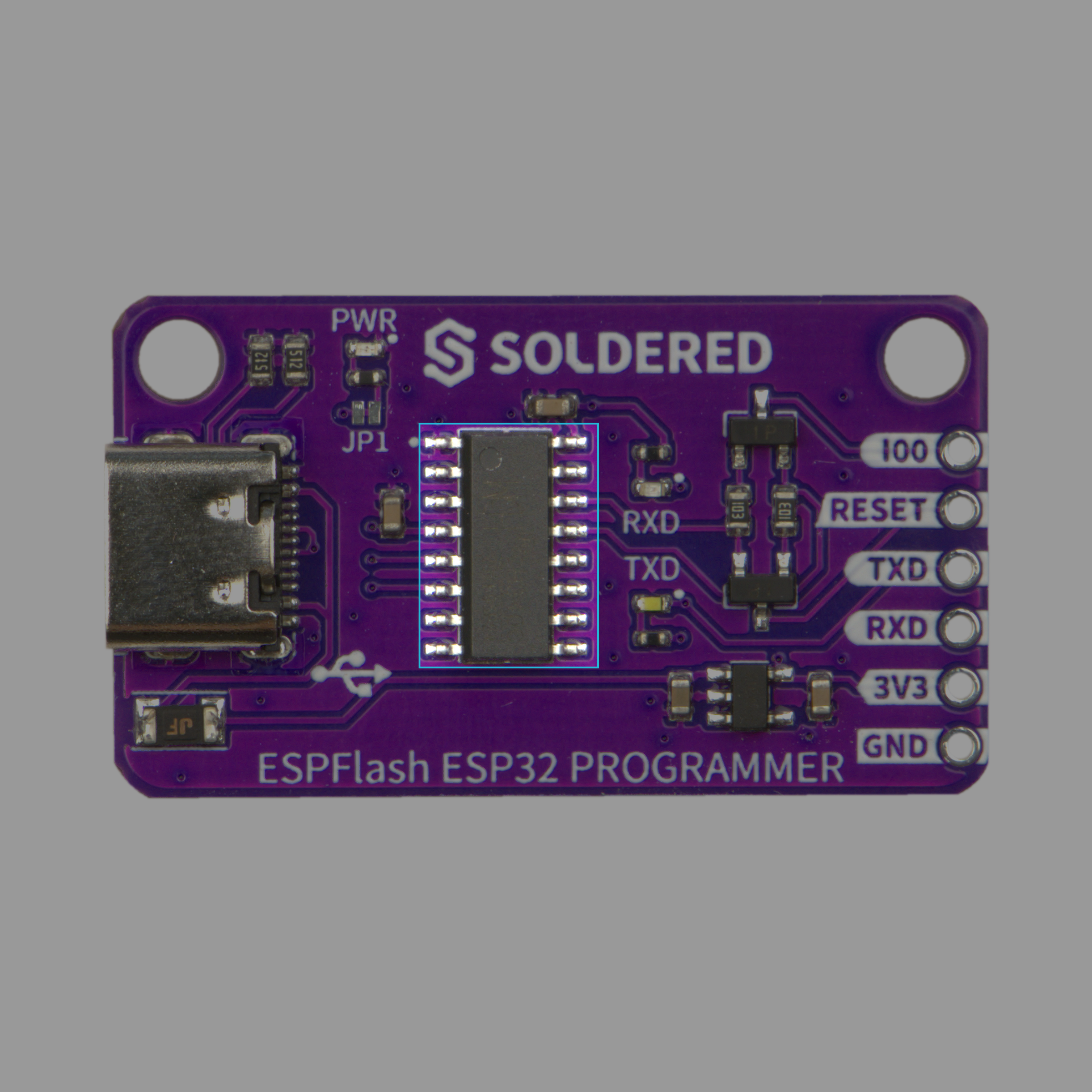
Datasheet
For an in-depth look at the technical specifications, refer to the official CH340C Datasheet:
USB to serial chip CH340C Datasheet
Detailed technical documentation for the CH340C converter
How it Works
The CH340C works by converting USB signals into serial communication signals and vice versa. It essentially translates data from the computer’s USB interface and passes it on to the ESP board.
-
USB Data Transfer: The USB interface sends data to the CH340C chip, where it is converted into UART signals. These UART signals are then sent to the TXD (Transmit) and RXD (Receive) pins, enabling data transmission to and from the connected device.
-
Signal Conversion: The CH340C handles the conversion between the USB protocol and the UART protocol. It supports standard baud rates from 50 bps up to 2 Mbps, and your computer's serial driver picks the rate to match what your code or flashing tool requests.
The breakout board also supplies the ESP with 3V3 and can place it into Bootloader mode using the IO0 pin.
Programming the ESP with the ESPFlash Programmer works the same as when you connect the USB cable directly to the ESP.
USB Plug-and-Play Functionality
The ESPFlash Programmer is designed for plug-and-play operation with minimal setup. It supports various operating systems, including Windows, macOS, and Linux, and is recognized by the system immediately after connection.
When connected to a computer via USB, the board is powered by the USB port, and data can be transmitted seamlessly to the connected serial device.
How to Connect It?
| ESPFlash Programmer | ESP Board |
|---|---|
| IO0 | IO0 |
| RESET | RESET |
| TXD | RXD |
| RXD | TXD |
| 3V3 | 3V3 |
| GND | GND |